

Why Flooring Is Its Own Decision in a Kitchen Remodel
Cabinets and countertops get most of the attention in a kitchen remodel, but the floor underneath them does plenty of daily work. It takes dropped pans, spilled water, dragged chairs and the occasional dog nail, all while anchoring the look of the whole room. For many homeowners weighing a kitchen floor, the choice narrows to solid or engineered hardwood versus luxury vinyl plank (LVP).
Both can look similar in a showroom sample. The differences show up in daily kitchen life: how each responds to water, how each is repaired when it gets damaged, and how each ages. This guide walks through both materials side by side, using what flooring manufacturers and the National Wood Flooring Association (NWFA) publish, so the choice comes down to how you actually use your kitchen, not just which sample looked best under showroom lighting.
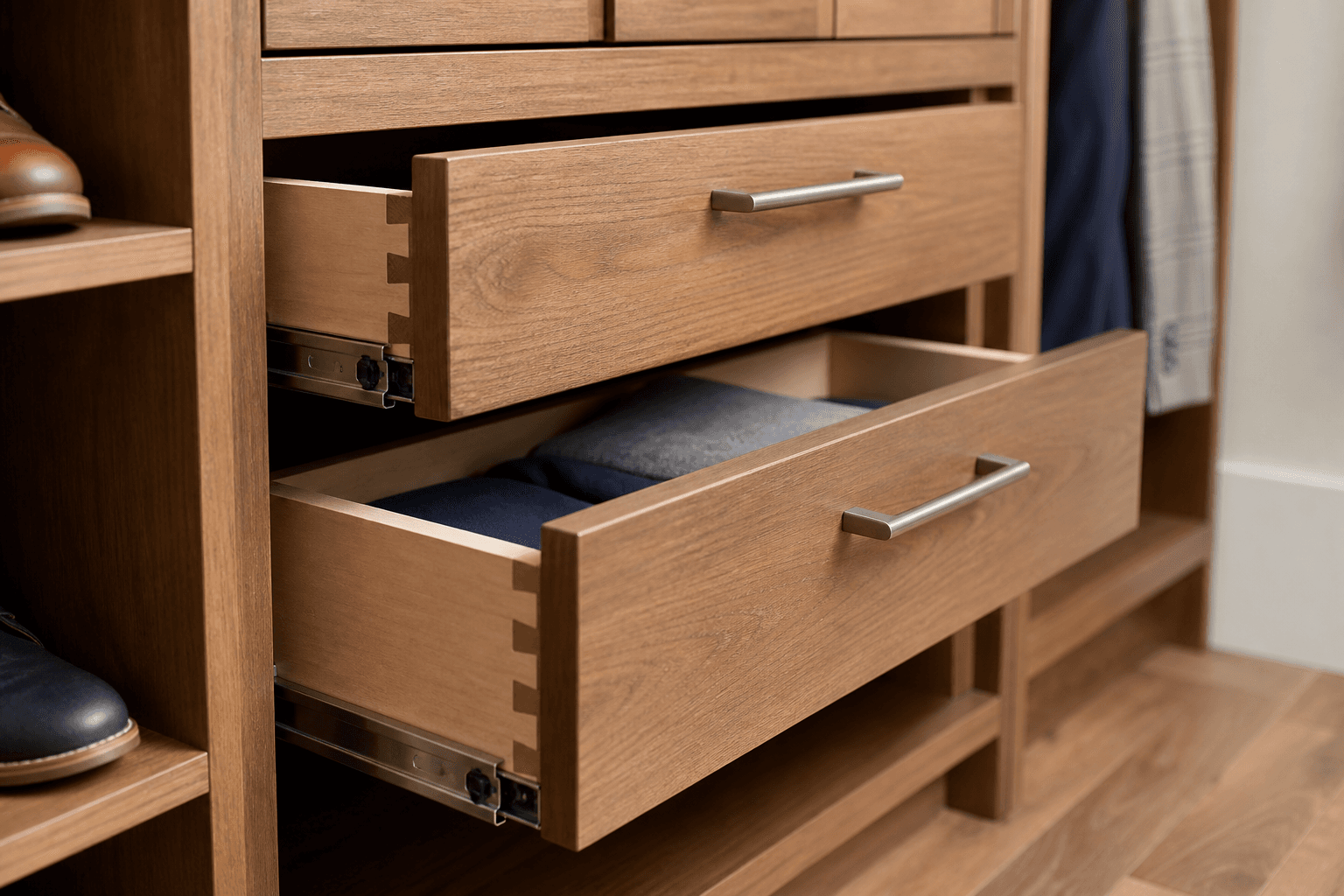
If you're still finalizing cabinet finishes, it's worth deciding on flooring at the same time. Floor tone and cabinet tone either contrast deliberately or blend into each other, and that pairing is a lot easier to get right when both samples are sitting side by side rather than chosen months apart.
Hardwood: Real Wood, With Real Tradeoffs
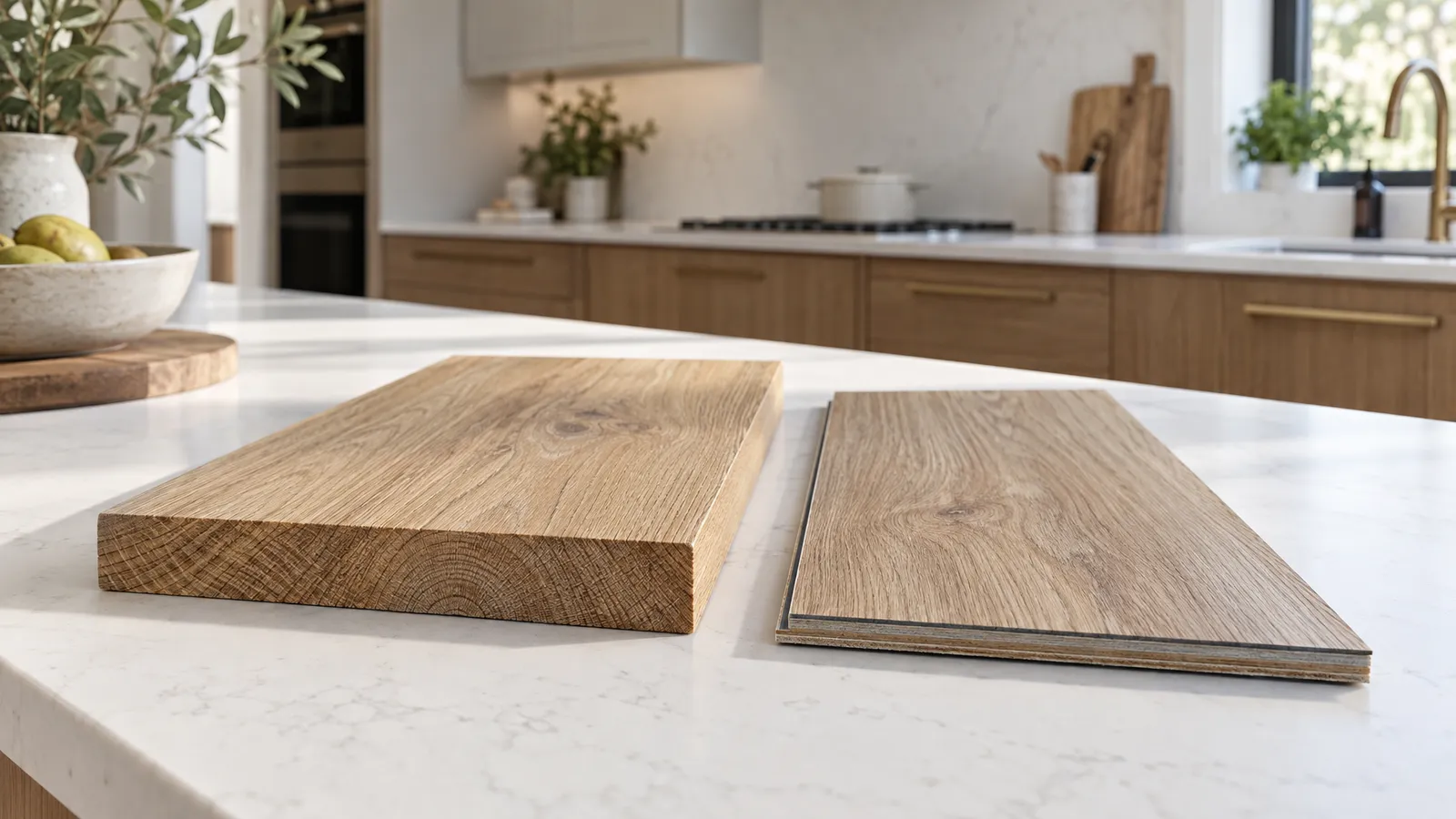
Hardwood comes in two constructions. The NWFA describes solid wood flooring as "made of one piece of wood from top to bottom," and engineered wood flooring as real wood made of "multiple layers, with the top layer made of high-quality wood" (NWFA, types of wood floors). The NWFA also notes that engineered floors "expand and contract less than solid wood flooring," which is about stability as humidity changes through the year. That is not the same thing as tolerating standing water: both are wood.
The tradeoff in a kitchen is water. The NWFA's care guidance is to "clean spills immediately with a dry or slightly damp cloth" and not to use wet mops or steam mops, which it says "will damage the finish and the wood over long periods of time" (NWFA, maintenance). Around a sink, dishwasher or refrigerator water line, that means paying attention: a slow leak under an appliance can go unnoticed. That is one reason some homeowners use hardwood in the dining and living areas of an open plan and a different material in the kitchen's work zone.
Hardwood's big advantage is renewal. According to the NWFA, solid wood "can be sanded and refinished many times," while engineered wood can also be sanded and refinished but "cannot be done as many times as solid wood." Between full refinishes, the NWFA says a floor that looks dull can be renewed through recoating, which applies a new coat of finish. If your remodel leans toward a warm, traditional palette with wood cabinetry, hardwood in a complementary tone can carry the wood look from floor to cabinet.
Solid and engineered hardwood bring warmth to a kitchen; spills near a sink or dishwasher need prompt cleanup.
Luxury Vinyl Plank: Built for Water, With Its Own Limits
Luxury vinyl plank is made to look like wood, and manufacturers market it heavily on realism. How convincing a given product is varies, so judge it from full-size planks in your own kitchen light rather than from a small chip.
The main reason people choose LVP for a kitchen is water. Many products are sold as waterproof: Armstrong, for example, describes its "100% waterproof planks" as "perfect for high-moisture areas such as kitchens, bathrooms and laundry rooms" (Armstrong Flooring), and Shaw says vinyl is suitable for bathrooms and kitchens when you choose an appropriate product (Shaw Floors). A waterproof plank is not a leak-proof floor, though. Water can still reach the seams, the edges, the underlayment and the subfloor beneath, and manufacturers still tell you to clean up: COREtec's care advice is to "absorb wet spills as quickly as possible by blotting with paper or cloth towels" (COREtec FAQ). Treat a leak on LVP as urgently as a leak on any other floor.
Installation depends on what is underneath. Shaw says that in many cases LVT/LVP can go over existing flooring "provided the surface is flat, clean, and in good condition," and it stresses subfloor preparation; its installation time "varies," and subfloor prep can extend it. Each product has its own installation instructions and flatness requirements, so check them against your floor before assuming no leveling is needed.
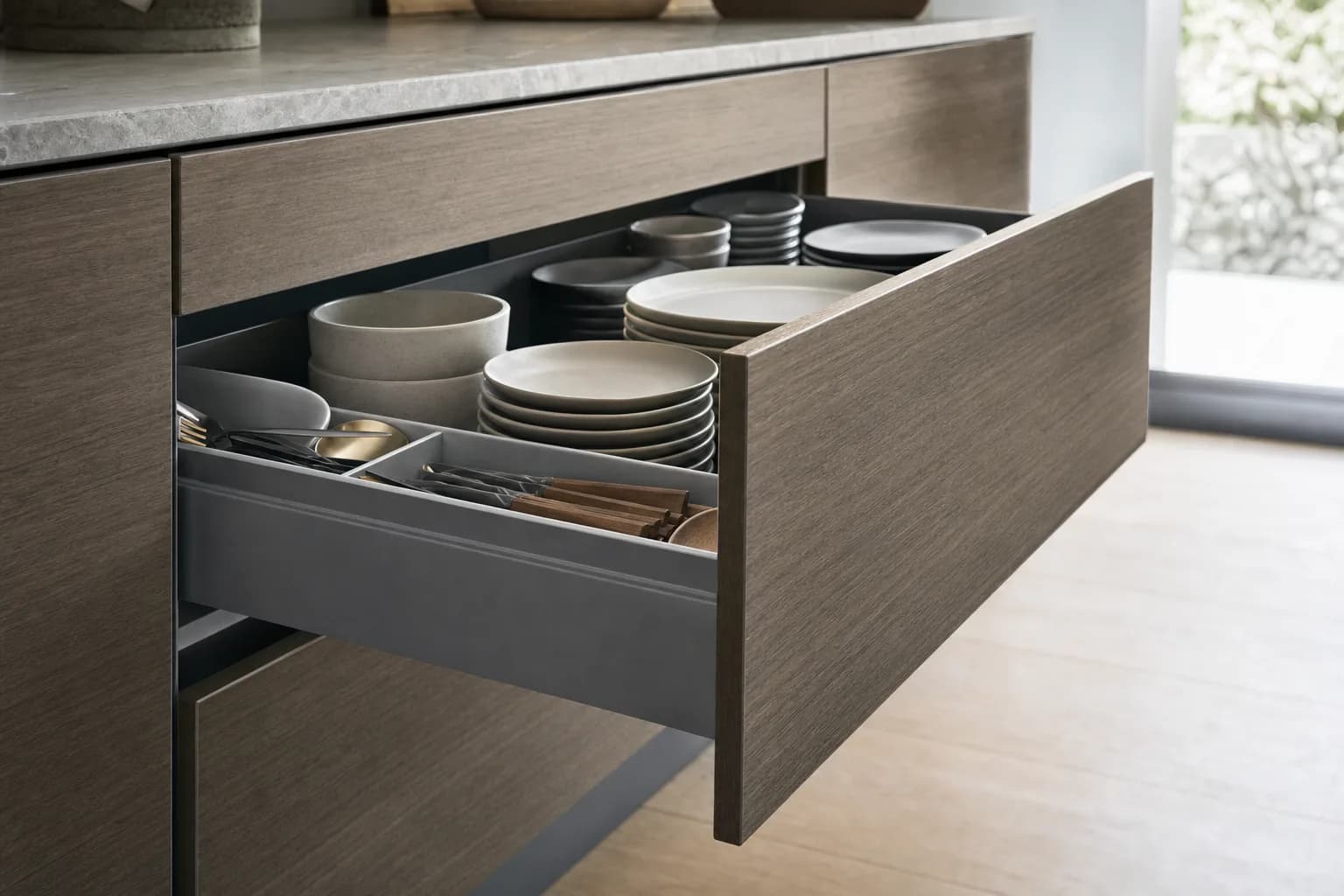
Repair works differently from wood. Sanding and refinishing is a wood-floor option; for vinyl, ask the manufacturer or installer how a damaged plank is repaired or replaced, and keep a few spare planks from the same lot. COREtec also advises using "proper protection and care when moving furniture or other heavy objects." For a kitchen where cabinets lean modern or minimalist, a wide-plank LVP in a matte, low-sheen finish can pair naturally with flat-panel or handleless cabinet doors.
Cost: Compare Bids, Not Categories
Price is often the deciding factor once the visual and durability tradeoffs are on the table, but category averages do not tell you what your floor will cost. Product grade, plank size, finish, the condition of the subfloor, removal of the old floor, and labor all move the number, and prices for LVP, engineered and solid hardwood can overlap depending on which products you compare.
The practical approach is to get installed bids for the specific products you are considering, for the same square footage, and ask each installer to itemize:
- Material: the exact product, and how much overage is included for cuts and spares.
- Preparation: removal of the existing floor, and any leveling or subfloor work the product's instructions require.
- Installation and finishing: labor, transitions and trim, and for site-finished hardwood the sanding and finish coats.
Long-term cost matters as much as day-one price. A wood floor can be recoated or refinished, within the limits the NWFA describes for solid and engineered wood, while a damaged vinyl plank is dealt with by repair or replacement. Which one costs less over the years depends on the products, how the kitchen gets used, and how well water is managed day to day.
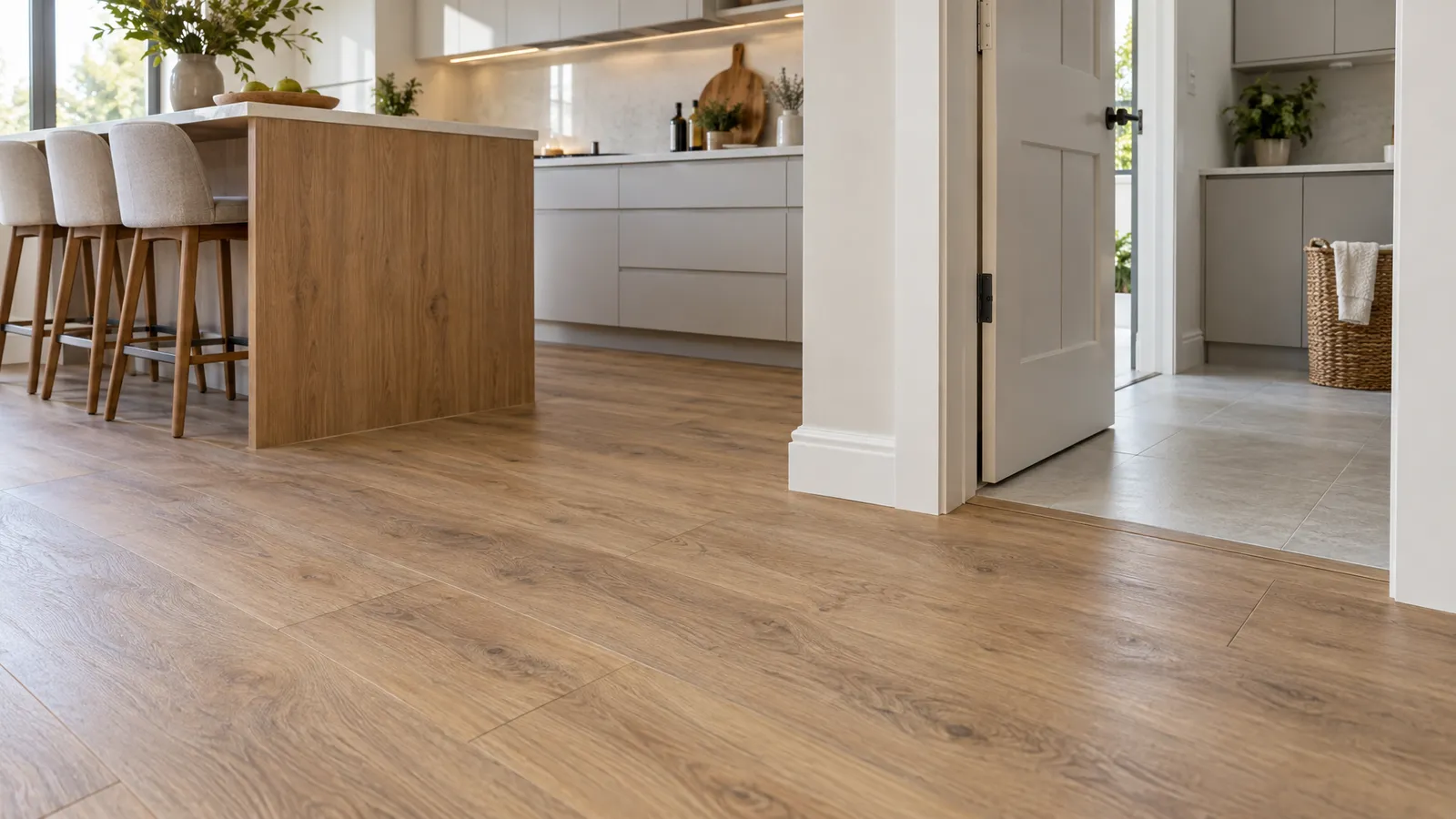
Wide-plank vinyl in a matte finish alongside flat-panel cabinets and an island.
Pairing Flooring With Your Cabinet Finish
Flooring and cabinetry read as one visual system, so the pairing matters as much as either choice on its own. A few rules of thumb make this easier when you're standing in a showroom with sample boards in each hand.
Light cabinets with a dark or medium-toned floor create contrast, which can keep an all-white or light-gray cabinet scheme from feeling flat. Dark or espresso-toned cabinets often pair better with a mid-tone or lighter floor; two dark surfaces together can make a small kitchen with limited natural light feel closed in. Warm wood-tone cabinets don't need to match the floor's exact species; a coordinating undertone (both warm, or both cool) is usually easier to live with than a near-miss match.
If you're working through cabinet finish options at the same time as flooring, bring both samples into the actual room and look at them at different times of day before deciding. Finishes can look noticeably different under your kitchen's daylight and fixtures than under showroom lighting, and a quick check at home is far easier than living with a pairing you don't like.
Maintenance and Moisture Management, Whichever You Choose
Neither material takes care of itself, and in a kitchen the common thread is water. For hardwood, the NWFA says to clean spills immediately and avoid wet or steam mops. For LVP, COREtec says to blot wet spills as quickly as possible. Either way, check appliance supply lines and the dishwasher connection when you remodel, and deal with any leak as soon as you find it: a waterproof plank does not protect the subfloor under it.
Follow the care instructions for the specific product you buy. Finishes and wear layers differ, so check what the product's warranty asks of you. For hardwood, ask your installer or the finish manufacturer about recoating as the finish wears. For vinyl, use proper protection when moving furniture and appliances, as COREtec advises.
If you're weighing flooring against other kitchen surfaces that also take daily wear, our guide on cabinet hardware that holds up to daily use applies the same durability-first thinking to pulls and hinges. The pattern repeats across a remodel: the surfaces you touch and stand on every day deserve the most scrutiny, not just the ones that photograph well.
FAQ: Hardwood vs. Luxury Vinyl in a Kitchen
Is luxury vinyl plank actually waterproof, or just water-resistant?
Many LVP products are sold as waterproof; Armstrong, for example, markets "100% waterproof planks" for kitchens and bathrooms. That describes the plank, not the whole floor. Water can still reach seams, edges and the subfloor, so check the specific product's claims and installation instructions, and clean up spills and leaks promptly, as COREtec's care advice says.
Can I put hardwood flooring in a kitchen at all, or is it too risky?
Yes, many kitchens have wood floors. The risk is unmanaged water: the NWFA says to clean spills immediately and avoid wet or steam mops. If you keep an eye on appliance connections and don't let water sit, wood can work in a kitchen. Some households choose LVP for the work zone instead, but it still needs prompt cleanup of leaks.
Does luxury vinyl plank lower my home's resale value compared to hardwood?
There is no single answer; it depends on the market, the house and the products. What you can control is choosing flooring that matches the finish level of the rest of the home and having it installed to the manufacturer's instructions.
How long does each flooring type typically last in a kitchen?
It depends on the product and how the kitchen is used, so compare warranties for the specific products. What differs is how each is renewed: the NWFA says solid wood can be sanded and refinished many times and engineered wood fewer times, and both can be recoated; vinyl is not sanded and refinished like wood, so ask how a damaged plank is repaired or replaced.
Should flooring be chosen before or after cabinets in a remodel?
Ideally, they're chosen together. Cabinet finish and floor tone influence each other so directly that picking one in isolation risks a mismatch. If you already have cabinets picked out, bring that door sample with you when selecting flooring, or visit a showroom so you can see cabinet finishes and your flooring sample side by side before committing.