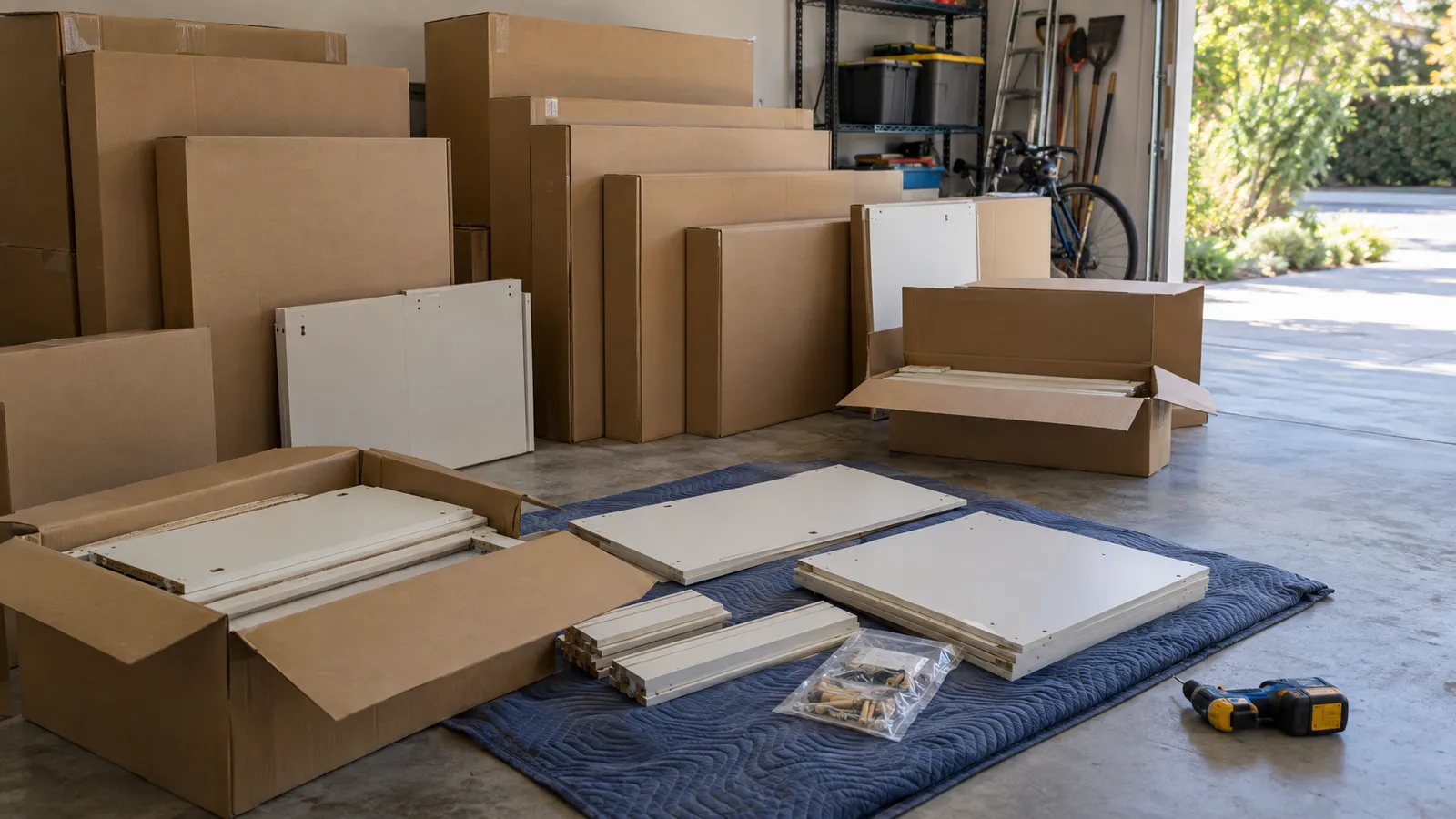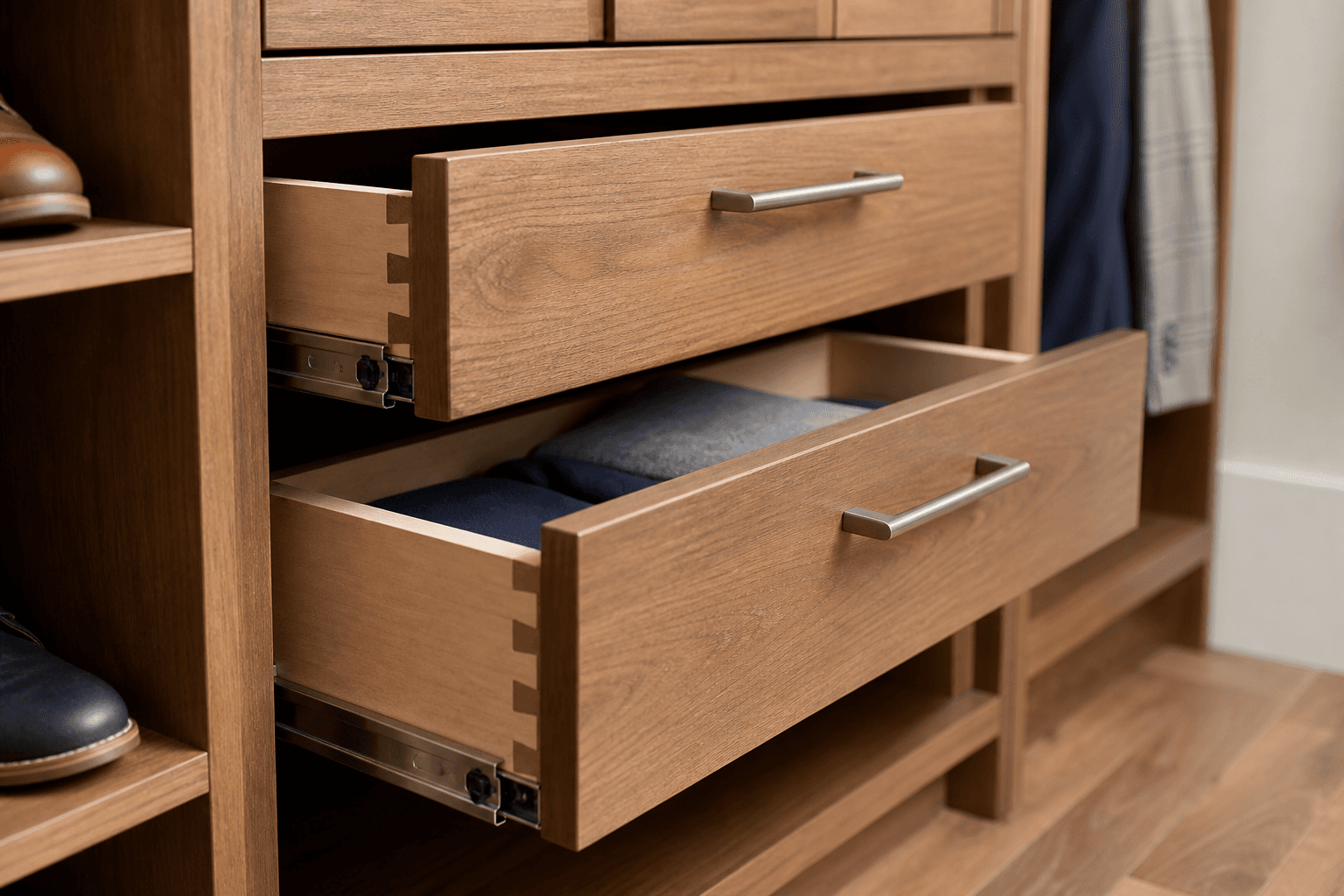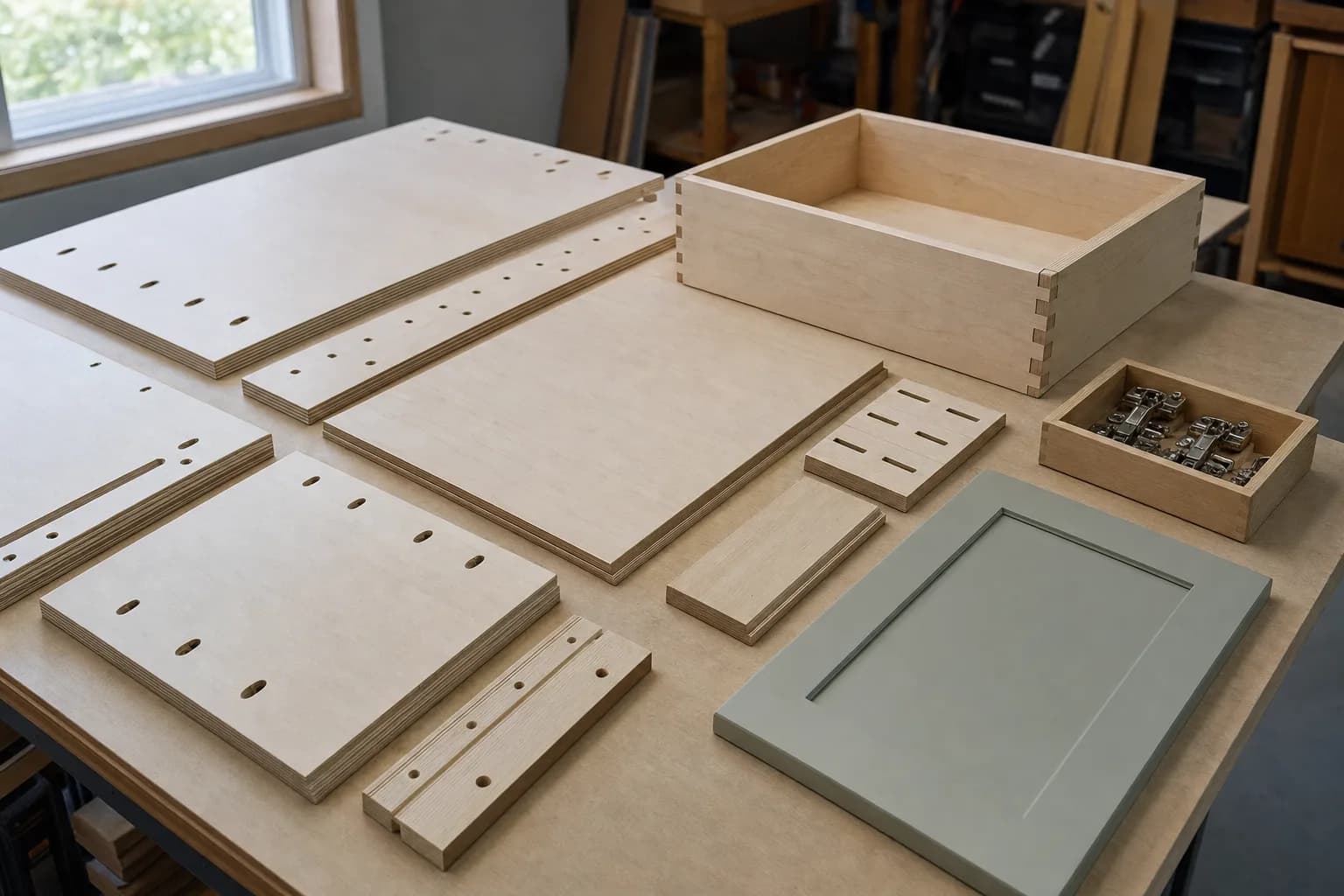


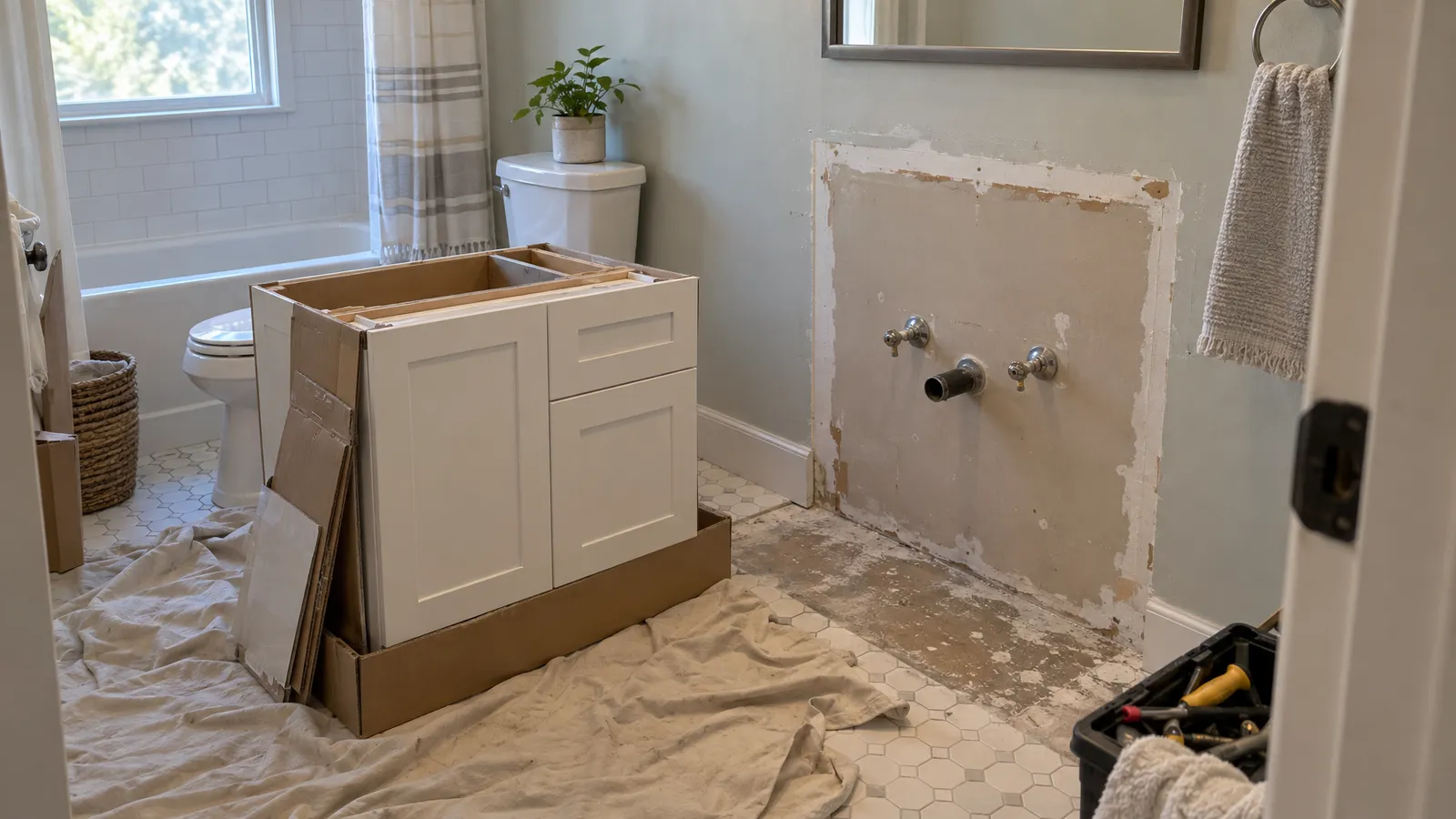
Most people asking about this are deciding between three jobs that sound alike and cost very differently: a new cabinet under the old top, a new top on the old cabinet, or everything at once. The plumbing and the footprint decide which one you are really doing.
What replacing a vanity costs
Every figure below is a national number, and each source counts a different scope, which is why they disagree. We found no published San Jose figure.
| What it covers | Range | Source |
|---|---|---|
| Labor to replace: remove and dispose of the old vanity, disconnect and reconnect plumbing, install | $665–$3,300 | This Old House, updated June 2026 |
| Installation only, per vanity; removal of the old one, plumbing changes and permits are extra | $576–$871 | Homewyse, May 2026 |
| Installation booked through the platform | $141–$461 average | Thumbtack, June 2026 |
| Premade vanity unit | $100–$2,600 | This Old House |
| Vanity built by a cabinetmaker | $500–$2,800, plus $200–$1,000 to install | This Old House |
| Plumber to move or run a new line | $45–$200 per hour | This Old House |
The spread is mostly scope: Homewyse leaves out removal of the old vanity, while This Old House includes removing and disposing of it. No national guide prices removal on its own, so if a quote for "just removing a vanity" seems high, ask what it includes.
New cabinet, old top: when keeping the countertop works
Keeping the top saves the cost of a new one, but only when the top and the new cabinet fit each other:
- The new cabinet's width and depth have to match the top's overhang and backsplash, or the top will sit short or hang over.
- The sink bowl underneath must clear the new cabinet's frame, drawers and any center stile.
- The top has to come off whole. It is caulked to the wall and screwed or clipped to the old cabinet, so cut the caulk and find every fastener before lifting it.
No manufacturer or code source sets a rule for reusing a top, so treat it as a fit question you check with a tape measure before buying, not after. When the bathroom is getting a different size of vanity, or switching from freestanding to wall-mounted, plan on a new top.
The reverse job, a new top on the old cabinet, is priced on its own: Angi puts vanity-top replacement at about $2,300 on average (2025 data). If the cabinet is dated too, compare that figure with the premade vanity prices above, and check whether the vanity you like comes with a top.
The job, step by step
Family Handyman rates the swap "Intermediate" and "a half day" when nothing moves. The sequence in its guide and This Old House's is the same:
- Shut off the hot and cold supply valves under the sink, or the main shutoff.
- Disconnect the P-trap at its slip nuts, then the supply lines.
- Cut the caulk where the top and cabinet meet the wall, remove the top, then unscrew the cabinet from the wall.
- Patch and paint the wall where the old cabinet stood, and check whether the flooring runs under the old footprint.
- Set the new cabinet, shim it level, and fasten it to the studs.
- Set the top, reconnect the supplies and trap, run water and check for leaks, then caulk the backsplash.
This Old House also suggests replacing old shutoff valves while the water is off. In San Jose that turns the job into permitted plumbing work, because replacing valves is outside the plumbing permit exemption (see below).
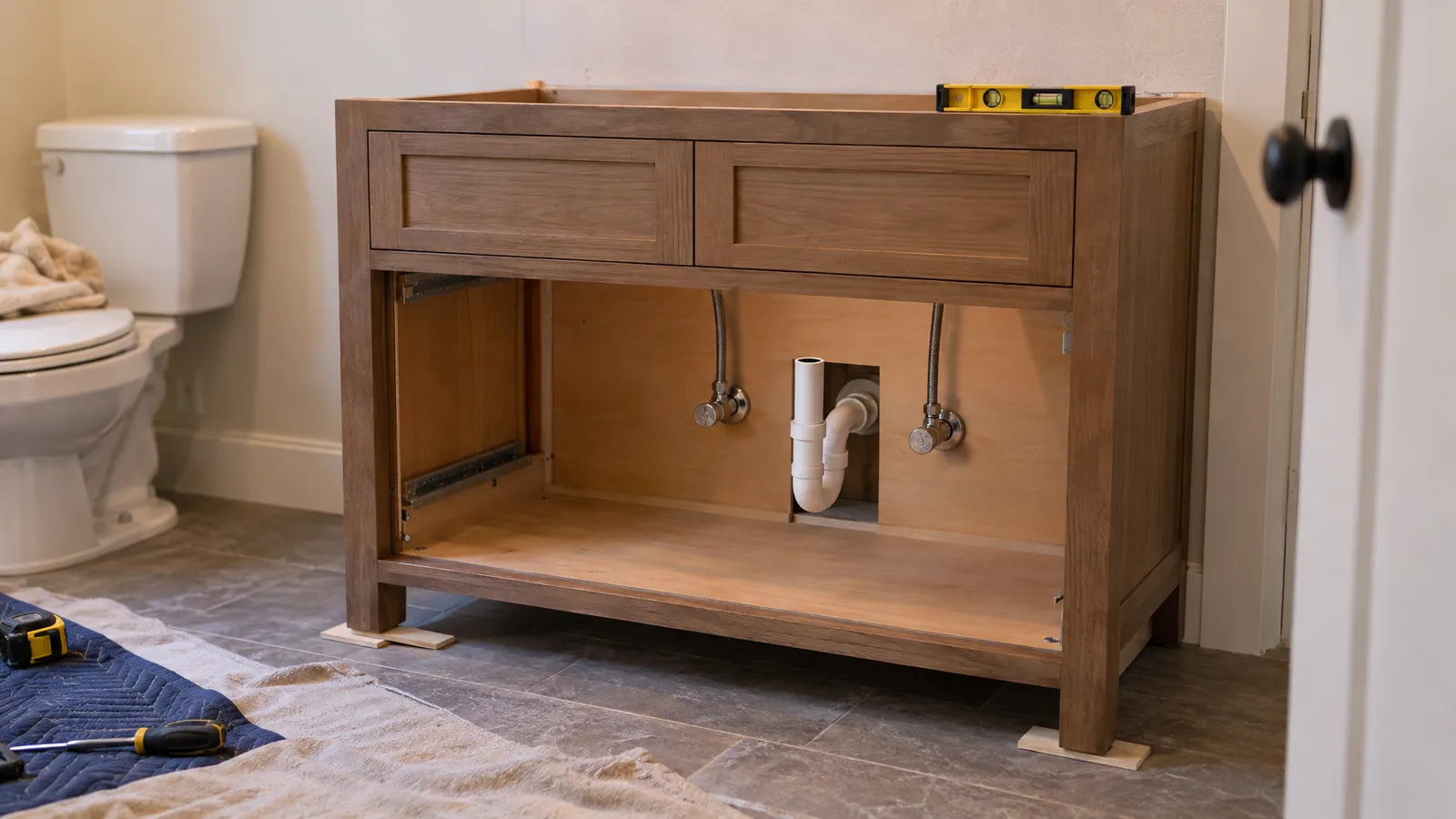
The footprint and the plumbing decide the real scope
A like-for-like swap stays small. Three changes make it bigger:
A different size. A narrower vanity exposes floor and wall the old one covered. A wider one can put the drain off-center under a new sink. Moving the drain sideways is limited by the vent: the 2025 California Plumbing Code caps the trap arm, the run from trap to vent, at 30 inches for 1-1/4 inch pipe and 42 inches for 1-1/2 inch pipe, and the tailpiece at 24 inches. It also requires at least 24 inches of clear space in front of a lavatory; the 21 inches in the International Plumbing Code does not apply in California.
Wall-mounted instead of freestanding. A wall-hung vanity carries its own weight and everything on it. Kohler's installation guide for one of its wall-hung vanities calls for 5/16-inch lag bolts rated for 500 lb into studs, a stud within 3 inches of each side, and 2x8 backing behind the finished wall where the studs do not line up. Kohler's guide installs that backing before the finished wall, so check what is behind your drywall before choosing wall-mount.
A new height. Fixr gives 32 inches as the standard vanity height and 36 inches as the "comfort" height, with the drain at least 18 inches above the floor. Before changing height, check the new model's rough-in sheet against your existing drain and supply positions.
Two smaller notes from the installation guides: Kohler's guide for that vanity says to secure the sink or top with siliconized acrylic caulk, not 100% silicone, which damages the finish; and Family Handyman warns not to overtighten the trap's slip nuts, because plumbing fittings crack.
Permits in San Jose
San Jose's municipal code exempts "cabinets, counter tops and similar finish work" from a building permit (Section 24.02.120). Plumbing has its own list: repairs are exempt only if they do not involve "the replacement or rearrangement of valves, pipes or fixtures" (Section 24.02.130). A sink is a fixture.
Read together, a cabinet-only swap with the existing sink and plumbing reconnected looks exempt, while a new sink, new valves, or a moved drain does not. The city issues a single fixture replacement permit and a Minor Kitchen/Bath Remodel permit online for in-place replacements; moving fixtures needs a regular permit. That is our reading of the code text, not a ruling, so confirm your project with the San Jose Permit Center before you start.
A permit has a second effect on single-family homes built on or before January 1, 1994: under California Civil Code Section 1101.4, noncompliant plumbing fixtures, including interior faucets over 2.2 gallons per minute, must be replaced with water-conserving ones before final approval.
Do it yourself, a handyman, or a contractor
A homeowner with basic tools can do a like-for-like swap; This Old House still recommends a professional for the removal and installation, and for anything involving rerouted plumbing or walls.
For hired help, California's licensing rule matters more than the price. Since January 1, 2025, an unlicensed person may take a job only if labor and materials together come to less than $1,000, "the work cannot require a permit", and they employ no one on it (Business and Professions Code Section 7048; Contractors State License Board bulletin 24-07). So if you hire out a vanity swap that needs a San Jose plumbing permit, it needs a licensed contractor whatever it costs. Doing permitted work on your own home yourself is an owner-builder question to ask the Permit Center.
Choosing the replacement
Measure the space, the drain and supply positions, and the existing top before you shop, then pick the vanity to fit the plumbing rather than the other way round. Our guide to choosing a bathroom vanity covers sizes, mounting styles and materials, and the vanity catalog lists widths from 24 to 72 inches.
Excelle Kitchen & Bath's San Jose showroom at 1350 Ridder Park Drive, Suite B, is open Monday to Saturday, 9 to 5. Bring your measurements and photos of the existing plumbing, and see bathroom vanities in San Jose for how we work, or contact us for a quote.
FAQ: Replacing a bathroom vanity
How much does it cost to replace a bathroom vanity?
National cost guides put the labor at $665 to $3,300 including removal and plumbing reconnection (This Old House, 2026), with the vanity itself from about $100 for a small premade unit to $2,600 for a large double. Installation-only estimates run lower: $141 to $461 on Thumbtack, and $576 to $871 on Homewyse, which excludes removal.
Can I replace a bathroom vanity and keep the countertop?
Yes, if the top fits the new cabinet: its overhang and backsplash must match the new cabinet's width and depth, the sink bowl must clear the cabinet frame and drawers, and the top must come off in one piece. Changing the vanity's size or mounting usually means a new top.
Do I need a permit to replace a bathroom vanity in San Jose?
San Jose's code exempts cabinets and countertops from a building permit, but its plumbing exemption excludes replacing or rearranging pipes, valves or fixtures. On that reading, a cabinet-only swap looks exempt while a new sink, new valves or a moved drain likely needs a permit. Confirm with the San Jose Permit Center.
Can a handyman replace a bathroom vanity in California?
An unlicensed handyman may take the job only if labor and materials total less than $1,000, the work needs no permit, and they hire no one, under the rule in effect since January 1, 2025. A hired vanity job that requires a permit needs a licensed contractor.
How is a wall-mounted vanity attached?
To studs or solid backing behind the wall. Kohler's guide for one of its wall-hung vanities specifies 5/16-inch lag bolts rated for 500 lb, a stud within 3 inches of each side, and 2x8 backing where studs do not line up, installed before the drywall.