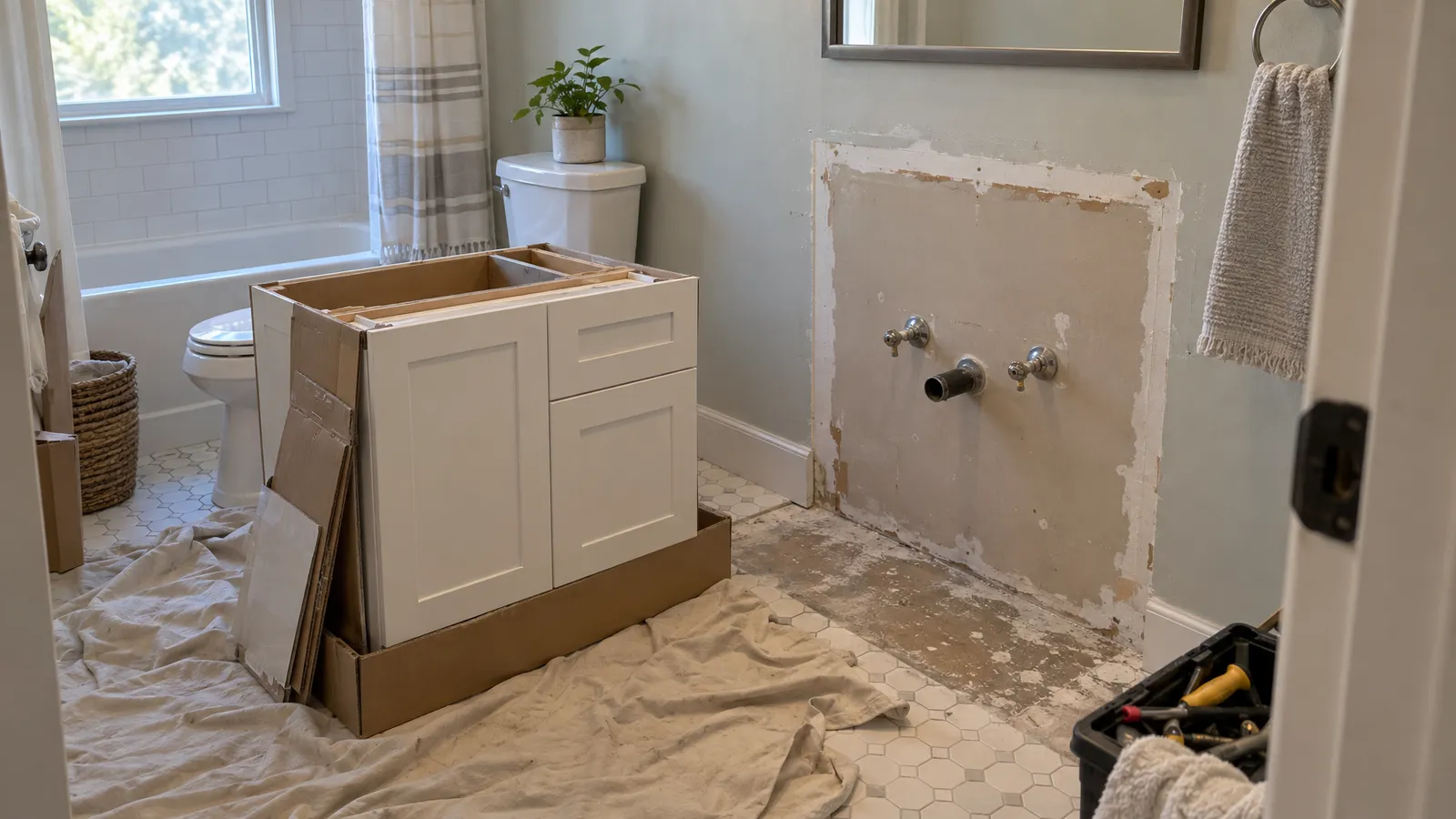


"RTA" describes how a cabinet is delivered, not how well it is made. The same retailer can sell one box both ways: RTA Cabinet Store sells its cabinets flat-packed or assembled for a $75 per-cabinet fee. So the useful question is not "is RTA good?" but "is this RTA cabinet good, and what will it cost by the time it is on the wall?"
What to check on the box itself
Ask for the construction sheet before you order. These are the lines that matter, with what to look for:
| Part | What to look for | Reference |
|---|---|---|
| Box sides | The panel material and thickness; Consumer Reports' 2016 buying guide gives 3/4-inch plywood instead of 1/2-inch particleboard as an example of a sturdier frameless box | Consumer Reports buying guide |
| Face frame (framed cabinets) | Solid wood; American Woodmark's stock line, for example, lists a double-doweled solid hardwood frame | Consumer Reports (2016); American Woodmark spec sheet |
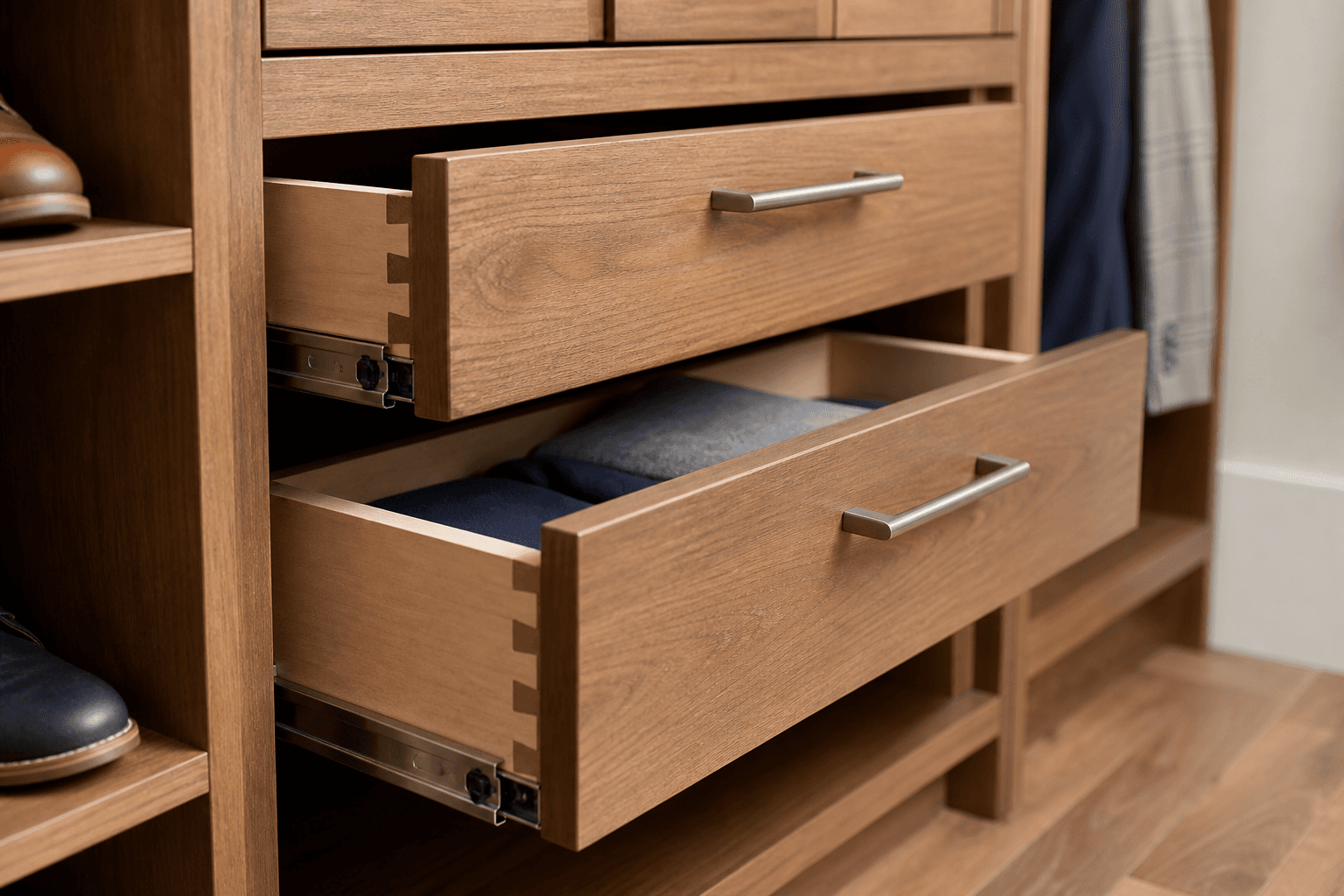
| Drawer boxes | Solid-wood sides with dovetail joints; Consumer Reports says to "avoid stapled particleboard" | Consumer Reports (2016) |
| Drawer glides and hinges | The glide and hinge make and rating; KCMA reports that certification failures typically occur in "mechanical endurance (e.g., drawer glides)" | KCMA certification FAQ |
| Finish | A factory finish tested for heat, humidity and household spills | KCMA A161.1 test list |
Material alone does not separate RTA from assembled stock. American Woodmark's assembled stock cabinets, sold at Home Depot, list 1/2-inch engineered wood sides as standard, with plywood as an option. IKEA's SEKTION frame is 18 mm (3/4-inch) particleboard with a melamine foil. Compare the specification line by line, whichever way the box arrives.
How the joints are held
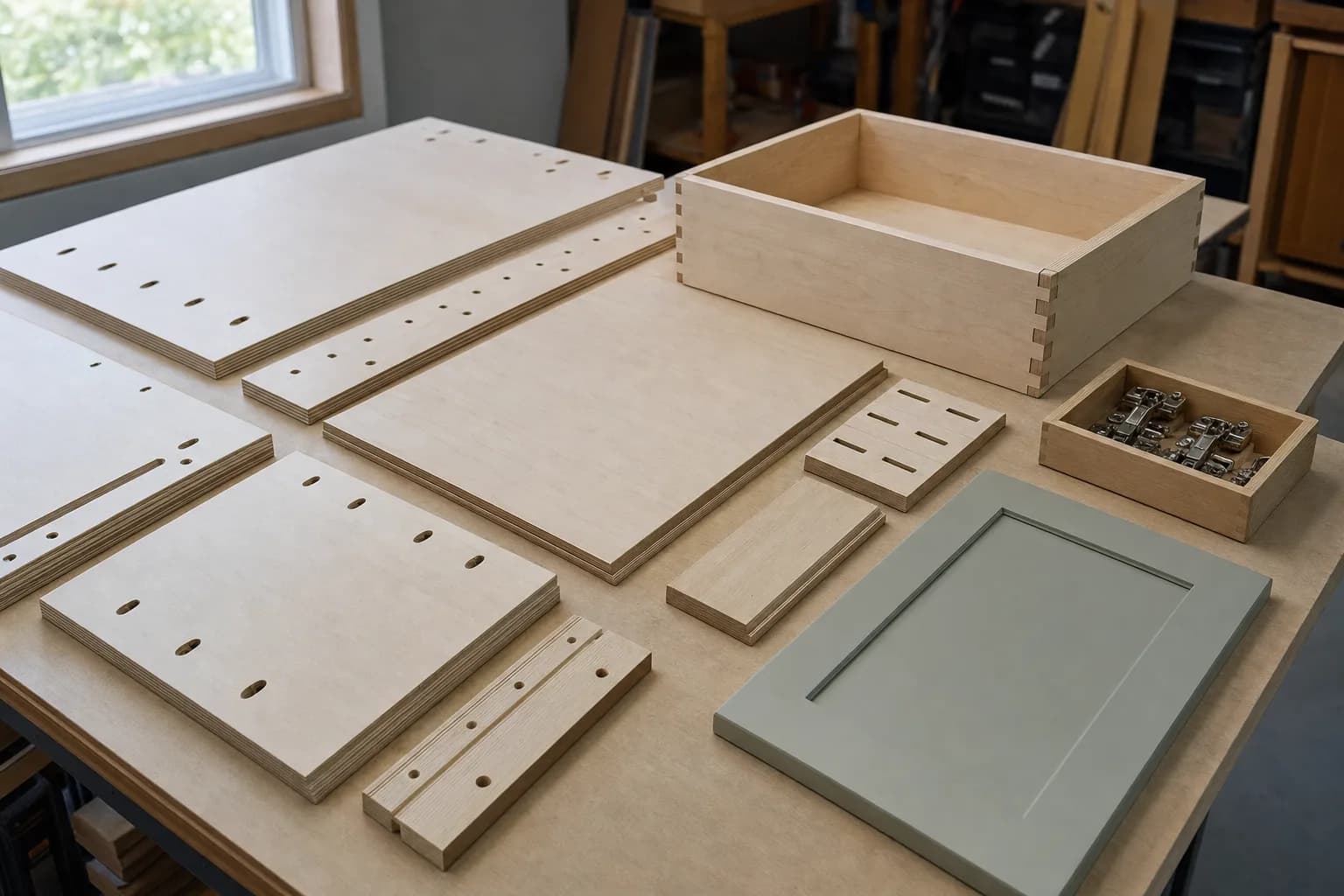
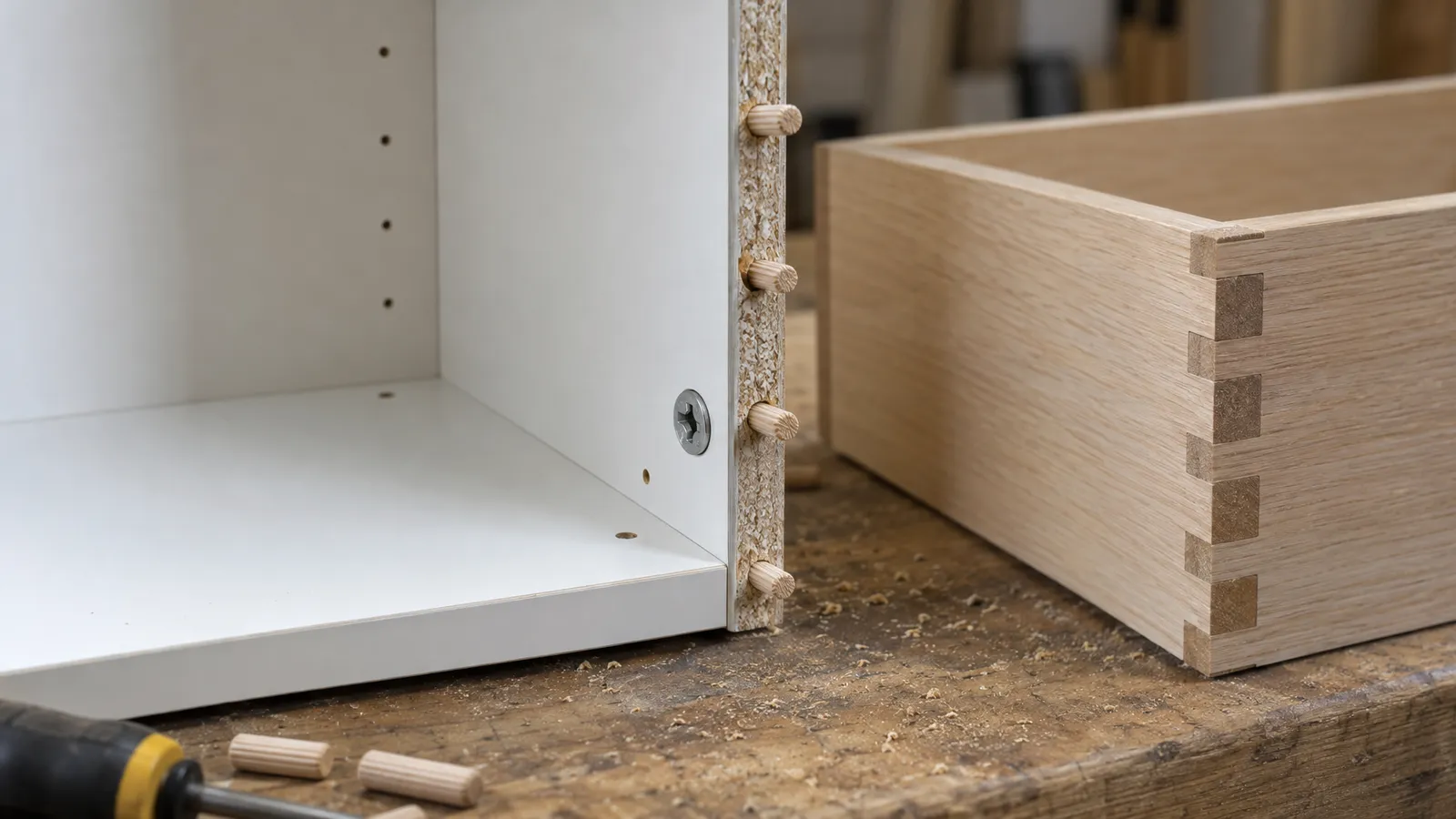
An assembled cabinet arrives with its joints already made. An RTA box depends on its joining system and on the person who puts it together. Retailers' guides describe three common systems: stapled boxes, dowels with glue, and cam locks, a metal fitting turned to pull two panels together. Ask which one a line uses, and whether the instructions call for glue.
The independent check on joint strength is KCMA's base front joint test, which loads the front of a base cabinet with 250 lb where it has drawer rails and 200 lb where it does not. A certified line has passed it.
KCMA certification: what it proves and what it does not
The Kitchen Cabinet Manufacturers Association certifies cabinet lines to ANSI/KCMA A161.1, a performance standard. Certified cabinets have "passed 14 rigorous, third-party tests", among them:
- wall cabinets loaded gradually to 600 lb;
- doors and drawers cycled 25,000 times;
- shelves and bottoms loaded at 15 lb per square foot for seven days;
- a finish held 24 hours at 120°F and 70% relative humidity, then cold-checked;
- spill tests with vinegar, citrus and grape juice, ketchup, coffee, olive oil and alcohol.
KCMA describes it as a performance test, and its FAQ sets no box material, so particleboard and plywood lines can both be certified. KCMA's own FAQ puts the alternative plainly: "Uncertified cabinets are backed solely by the manufacturer's word." To check a seller's claim, search the company in KCMA's "Find a Certified Company" directory rather than trusting a badge on a product page.
KCMA's separate ESP (Environmental Stewardship Program) seal is an environmental-management program, not a durability test. It requires no product testing; one of its prerequisites is formaldehyde compliance for the wood panels a maker uses.
The formaldehyde label
Particleboard, MDF and hardwood plywood, and finished goods made from them such as cabinets, must meet federal formaldehyde emission limits under TSCA Title VI, which EPA says are set at the same levels as California's CARB Phase 2 standard. Since March 22, 2019, products must be labeled "TSCA Title VI compliant", and a finished good's label names the fabricator and the month and year it was produced. The rule caps emissions; it does not make a product formaldehyde-free. Ask for the label on any particleboard, MDF or plywood cabinet, RTA or not.
What RTA costs beyond the box price
Angi's RTA guide says RTA cabinets "can be half" the price of assembled ones. The other half of the comparison is what you pay to get from a carton to a hung cabinet:
- Assembly. Consumer Reports' 2016 guide allows about an hour or more per set of base and wall cabinets for a homeowner. Homewyse estimates $204 to $520 to have a single cabinet assembled, most of it a two-hour labor minimum (January 2026), so the per-cabinet cost falls on a larger order. Retailers that assemble before shipping charge less: $75 per cabinet at RTA Cabinet Store.
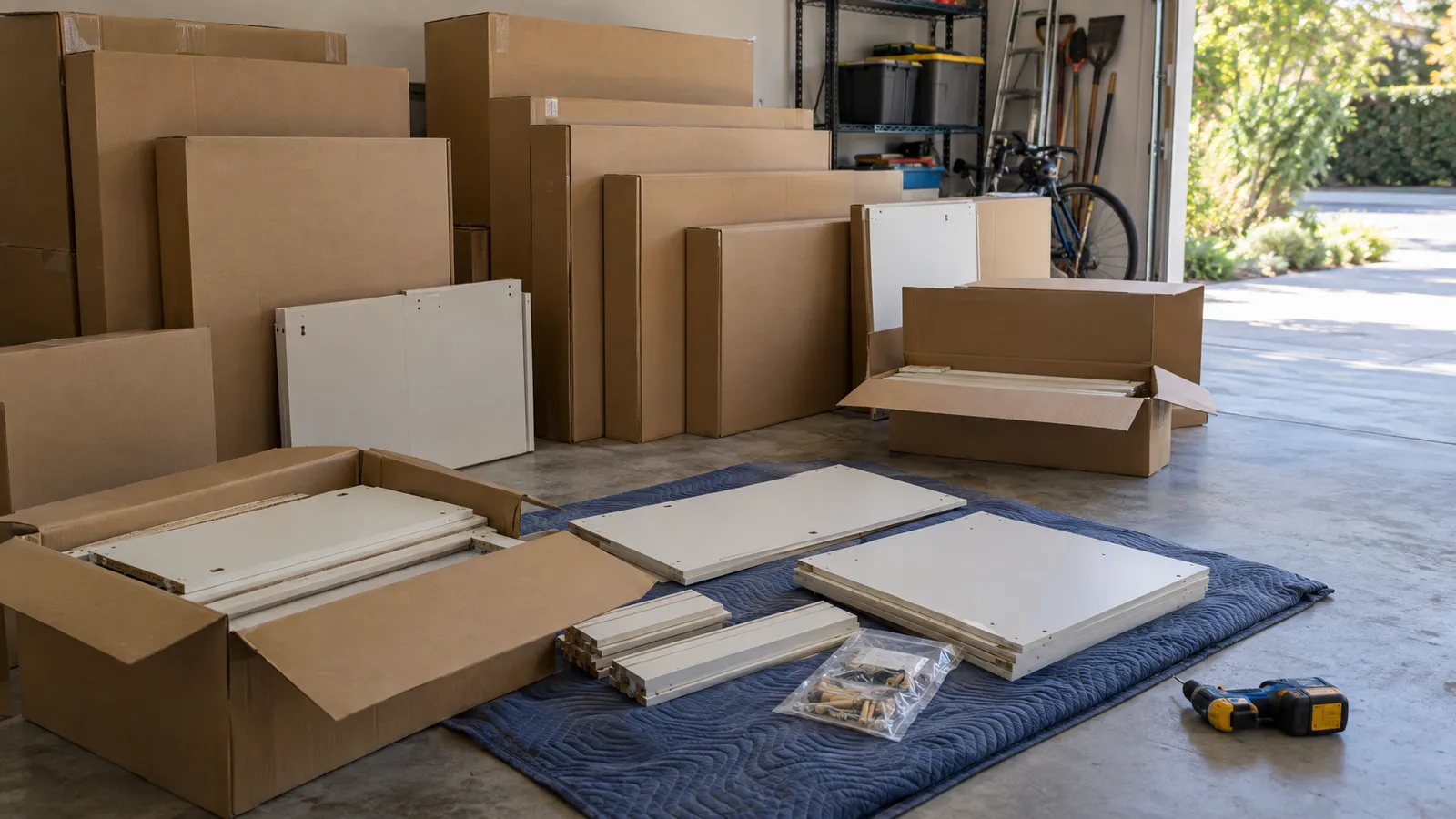
- Freight. A kitchen's worth of cabinets usually ships as freight. RTA Cabinet Store's terms say its website freight quote "is not guaranteed", that residential delivery is curbside, and that you must inspect for damage "while the driver is present". You carry the cartons in.
- Returns. At the same retailer, RTA cabinets are returnable within 30 days with a 20% restocking fee; assembled orders are final sale.
- Installation. Assembly is not installation. Leveling, scribing and fastening a run of cabinets is the same work whether the boxes arrived flat or built.
Where the cabinet was made now affects its price
Since April 2020, wooden cabinets and vanities from China, explicitly including RTA "flat packs", have been subject to US antidumping and countervailing duty orders; the China-wide antidumping cash deposit was set at 251.64%. The orders were continued in September 2025.
Separately, Proclamation 10976 put a 25% Section 232 tariff on imported kitchen cabinets and vanities from all countries from October 14, 2025, capped at 10% for the UK and 15% for the EU and Japan. Proclamation 11000 moved the scheduled increase to 50% to January 1, 2027, except for countries with an agreement. Ask any seller where a line is made and whether the price already reflects these duties; the rates are set and revised by federal notice, so check the current ones before you buy.
RTA, assembled stock, semi-custom or custom
Since RTA is a delivery method, the choice comes down to two things: whether the line's construction and certification check out, and whether you are set up for what RTA hands to you, namely assembly, curbside freight, inspecting cartons with the driver present, and returns with a restocking fee. If either is a no, an assembled line that passes the same checks is the better buy.
For how stock, semi-custom and custom lines differ in sizing and options, see our comparison of custom, semi-custom and IKEA cabinets, and our plywood vs MDF guide for the materials question in more depth.
Excelle Kitchen & Bath sells the premade and custom lines on our brands page; ask us for any line's construction sheet and compare it with the checks above. The San Jose showroom is at 1350 Ridder Park Drive, Suite B, open Monday to Saturday, 9 to 5.
FAQ: RTA kitchen cabinets
What does RTA mean for kitchen cabinets?
RTA stands for ready-to-assemble: the cabinet ships flat-packed in one or more cartons and is assembled by the buyer or an installer. Federal trade notices call RTA cabinets "flat packs" that may ship in one or more packages. The term describes delivery, not quality.
Are RTA cabinets good quality?
Some are and some are not. Check the construction sheet for plywood or thick particleboard boxes, solid-wood dovetailed drawers and full-extension glides, look the company up in KCMA's certified-company directory, and ask for a TSCA Title VI formaldehyde label.
What is KCMA certification?
A performance certification from the Kitchen Cabinet Manufacturers Association to the ANSI/KCMA A161.1 standard. Certified cabinet lines pass 14 third-party tests, including a 600 lb wall-cabinet load, 25,000 door and drawer cycles and finish tests for heat, humidity and spills. KCMA's FAQ sets no box material, so particleboard and plywood lines can both be certified.
How much does it cost to have RTA cabinets assembled?
Homewyse estimates $204 to $520 to have a single cabinet assembled as of January 2026, most of it a two-hour labor minimum, so the per-cabinet cost falls on a larger order. Some retailers assemble before shipping for less; RTA Cabinet Store charges $75 per cabinet, but its assembled orders are final sale.
Do tariffs apply to RTA cabinets?
Imported ones do. Wooden cabinets from China, including RTA flat packs, have been under US antidumping and countervailing duty orders since 2020. Imported cabinets from every country have carried a Section 232 tariff since October 14, 2025: 25% for most countries, capped at 10% for the UK and 15% for the EU and Japan, and scheduled to rise to 50% on January 1, 2027 except for countries with an agreement. US-made cabinets pay none of these. Rates are revised by federal notice, so check them before you buy.