


How to Choose a Cabinet Maker in the Bay Area
Factory dealer, local shop, or franchise — how to vet each, the warning signs worth slowing down for, and what a clear agreement covers.
Check four things before you sign a cabinet contract: photographs of finished installs the company did itself, a reference from a client whose kitchen went in more than a year ago, a written lead time with a date on it, and a payment schedule that matches the kind of contract you are signing. None of these guarantees a smooth project, but each one gives you something concrete to compare between suppliers, and a supplier who can't provide one of them is someone to ask more questions of.
That matters in cabinetry because supplier problems tend to surface late: as moving deadlines at the end of a project, when everything else is finished and the kitchen is waiting on boxes.
First, know who actually builds what
"Cabinet maker" covers three different businesses, and mismatched expectations start here:
- Factory-line dealers. They design your kitchen and order it from a manufacturer's catalog — stock or semi-custom lines built in a factory, delivered finished. The dealer's product is design and ordering accuracy, plus installation or an installer they refer. Many manufacturers publish a written warranty on their cabinets, on their own terms; ask the dealer for a copy of it, and ask separately what, if anything, the dealer itself stands behind in writing. Some cabinets marketed as "custom" are factory lines with size modifications, so ask which it is.
- Local millwork shops. They build your cabinets from sheet goods and lumber in their own shop. True custom: any size, any species. Quality and lead times depend on the individual shop, so its finished work and references matter more than its brochure.
- Franchises and national chains. Branded design-and-install operations selling manufactured components. The process is set by the brand; the local crew doing the work is what you're really evaluating.
None of these is inherently better. What matters is that the quote describes what you're buying accurately. If a catalog order is being described as "handcrafted custom," or a shop's quote doesn't say where the boxes are built, ask before you sign.
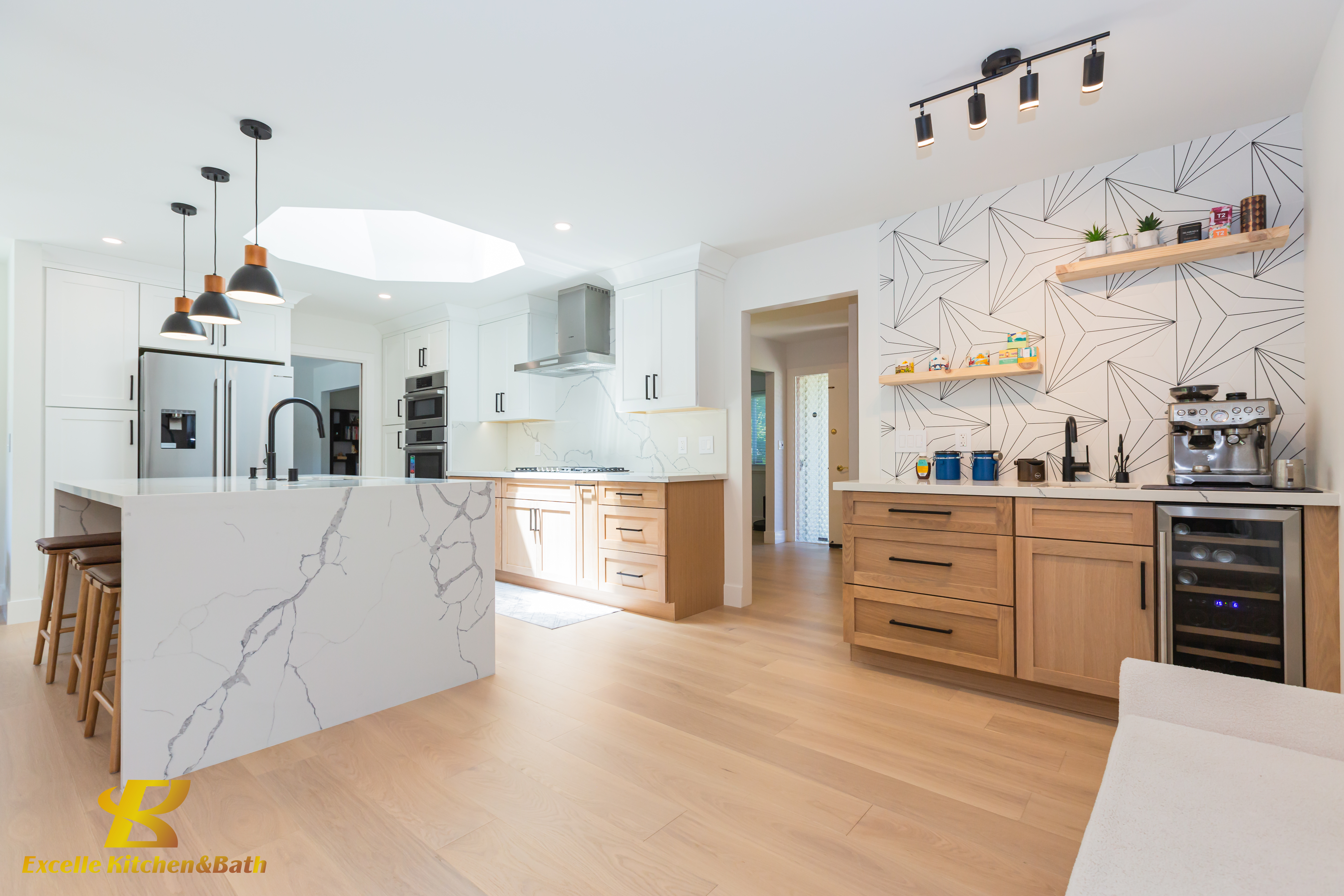
The vetting sequence
Five steps, in order, before any payment:
- See finished installs, not only showroom displays. A showroom shows what a manufacturer can build; photos of completed projects the company did itself show what it delivers in a real house with real walls. Ask for projects like yours — same scale, same tier.
- Call references, including older ones. California's Contractors State License Board (CSLB) checklist asks homeowners whether they got "at least three local references" from the contractors they are considering. A client a year or more past install can also tell you whether the drawers still glide, whether the punch list got finished, and how warranty calls were handled. Two useful questions: "What went wrong, and how did they handle it?" and "Would you use them again at the same price?"
- Get the lead time in writing, with a start condition. A number spoken in a showroom is not a schedule. Ask for the measurement date, drawing approval date, order date, delivery window and install window, and what happens to the schedule if a box arrives damaged.
- Understand the payment schedule, and which rules apply. This depends on what kind of agreement you're signing — see the next section.
- Ask who installs. Employees, a regular subcontractor, or a partner the supplier refers? Get the installer's name and, for installation work, check the license with CSLB.
Payments: a cabinet purchase versus a home improvement contract
Two kinds of paperwork show up in cabinet projects, and they are not the same thing.
A home improvement contract with a licensed contractor (for example, a design-and-install job, or your remodel contractor's contract that includes cabinets) falls under California rules that CSLB publishes. Its "Contracting for Success" guide states: "Except for a down payment, a contractor can't demand or accept payment for work or materials until the work is actually done or the materials are delivered. The down payment may not exceed $1,000 or 10 percent of the contract amount, whichever is less." CSLB's homeowner checklist adds: "Is there a schedule of payments? If there is, you should pay only as work is completed and not before." CSLB notes one exception: a contractor with a Blanket Performance and Payment Bond on file with CSLB may request the full contract amount up front. So under a home improvement contract, "a materials deposit when you approve drawings" is not something to agree to by default; check the bond exception and the payment schedule against CSLB's guidance.
A supply-only cabinet order (you buy cabinets from a dealer or shop, and someone else installs them) is a purchase agreement, and its deposit and payment terms are whatever the written order says. Read those terms closely: how much is due at order, what is refundable if you cancel, when the balance is due, and what happens if delivery slips. Paying a large share before drawings exist leaves you little held back if the order goes wrong.
If you're not sure which kind of agreement you have, ask the seller directly, and ask whether the seller holds a contractor's license.
Signs to slow down and ask more questions
- No itemized quote. A single lump number makes it hard to compare bids and hard to tell later what was included. Ask for every cabinet and accessory listed.
- A discount that expires today. Time pressure at the quote stage leaves you less room to check references and compare bids. Take the time anyway.
- A large payment before drawings. Under a home improvement contract, compare it with CSLB's down payment rule; under a supply order, ask what you get back if the order is cancelled.
- Vague answers about lead time. Ask what the estimate depends on and get the dates in writing.
- Criticism of every competitor instead of evidence of its own work. Ask to see its projects and references instead.
What a clear agreement covers
Paper that answers, in plain sentences: exact scope (every cabinet, every accessory, itemized), construction spec (box material, door material, finish, hardware), the schedule with dates, the payment stages, who is responsible for site measurements, what counts as acceptance, how damage and defects are handled and on what timeline, and what happens when a milestone slips. CSLB's checklist also reminds homeowners that "changes or additions to your contract must all be in writing," to confirm the contract requires the contractor to get any needed permits, and to ask for the "Notice to Owner" describing mechanics liens. If a clause you ask for is refused, ask why; the answer tells you something either way.
Already mid-project and worried?
The hardest version of this decision comes mid-project: money spent, schedule slipping, and the temptation to assume it's almost done. A working approach:
- Get a status you can verify. Ask for photos of your actual boxes or a shop visit, rather than "almost ready."
- Read your agreement first. Before setting deadlines or changing suppliers, check its notice, payment, cure and termination provisions. Any new milestone you set should be written, dated and consistent with those terms.
- Price the options. What's paid, what's delivered, what a replacement supplier would cost and how long they'd take. Sometimes finishing with the current supplier is the better choice; sometimes it isn't.
- Get advice before walking away. For a contract dispute, an attorney can tell you what your agreement and California law allow. Document what you've paid for and received either way.
If you're planning a kitchen and weighing a factory line against a custom quote, book a design consultation. Excelle is a cabinet and storage design studio: we plan the space, design the cabinetry, guide product selection across five premade manufacturer lines and our own custom line, and coordinate your order. For installation and other trades, we connect you with partners we work with regularly. If the cabinets are part of a larger remodel, our kitchen remodel design page explains who handles which part.
FAQ: Choosing a cabinet maker
How many quotes should I get for kitchen cabinets?
Three is a common number, and ideally they cover different business types: a factory-line dealer, a local millwork shop, and a third option that fits your budget. Identical scope is what makes the comparison fair.
What's a normal deposit for custom cabinets?
It depends on the agreement. Under a California home improvement contract with a contractor, CSLB says the down payment may not exceed $1,000 or 10 percent of the contract price, whichever is less, and later payments should follow completed work or delivered materials, unless the contractor has a blanket bond on file with CSLB. For a supply-only order, the order's written terms govern, so read the deposit, refund and balance terms before paying.
How do I check a cabinet company's reputation beyond online reviews?
Ask for references, including projects completed a year or more ago, and call them. Ask contractors and installers who they'd use in their own homes, since trades see how suppliers behave when something goes wrong.
Should I hire the cabinet maker or my general contractor to install?
Make one party accountable for installation: either the supplier or its named installation partner, working to the manufacturer's installation instructions. If the GC installs instead, get those instructions to the GC in writing and agree who handles adjustments and damage.
What lead time is normal for cabinets in the Bay Area?
Stock lines are generally the quickest, semi-custom factory orders take longer, and full custom work longest, but actual lead times vary by maker and season. Get the date in writing for your specific order.
Is it rude to ask a cabinet maker for proof of insurance and license?
No — it's routine. In California, CSLB's homeowner checklist starts with checking the status of the contractor's license online, so check anyone doing installation work on the CSLB website.
About the author
Anthony
Design Lead, Excelle Kitchen & Bath
Leads cabinetry and storage design at Excelle Kitchen & Bath, a design studio with a San Jose showroom serving the Bay Area. Ten years of kitchen and custom storage projects, specialising in space planning, semi-custom cabinetry specification, and closet systems.