

Why the Backsplash Is the Hardest Decision After Cabinets
Most people pick cabinets first, then treat the backsplash as an afterthought. Picking cabinets first is sensible; treating the backsplash as an afterthought isn't. A backsplash sits directly between your countertop and your upper cabinets, so in most kitchens it is seen right next to the cabinet finish. Get the pairing wrong and even beautiful cabinets can look mismatched.
A common misstep in San Jose and Cupertino kitchen remodels is choosing a bold cabinet color, then picking a tile without checking its undertone against the doors. The backsplash isn't just decoration. It's the transition zone between your countertop, your cabinet doors, and your wall color, and it has three jobs at once: protect the wall, tie the palette together, and add texture without competing for attention.
The pairing principles aren't complicated once you know what to look for. Cabinet finish shapes most of the backsplash decisions that follow, from tile material to grout color to how far up the wall it runs. Below, each cabinet finish family is paired with the backsplash approaches that suit it, along with what each material asks of you in daily use.
Pairing With White and Light Cabinets
White and off-white cabinets are the most forgiving base you can design around, but "forgiving" doesn't mean "anything goes." A frequent pitfall is pairing a stark, cool white cabinet with a slightly warm or cream-toned tile, which can read as dingy rather than intentional. If your cabinets lean cool white, match with a cool-toned tile: bright white subway, light gray marble-look porcelain, or a pale blue-gray mosaic.
For warmer white cabinets (anything with a hint of cream or ivory), look at natural stone-look tiles, soft beige tones, or a warm white with visible texture like handmade zellige. Zellige's slight irregularity and glossy variation add depth that a flat white cabinet alone doesn't have.
Grout color matters more than people expect here. White grout on white subway tile against white cabinets can look flat. A soft gray or greige grout defines the tile lines and keeps the backsplash from disappearing into the cabinetry. For a bolder statement, black or charcoal grout on white tile creates a graphic look that suits modern kitchens; dark grout against light tile makes the grout lines themselves the pattern, so consider how that will look as it ages and how you'll clean it.
Light cabinets also give you room to introduce a pattern. Herringbone-laid subway tile, a scalloped fish-scale shape, or a patterned cement-look tile all read as intentional design choices against a neutral cabinet base, without fighting for attention the way they can against a busy or dark cabinet finish.
Against plain white cabinets, a warm metallic mosaic adds color and texture without introducing a second cabinet color.
Pairing With Dark and Bold Cabinets
Navy, charcoal, forest green, and black cabinets are a strong design choice, and they ask for more care in backsplash selection than a neutral palette does. The risk with dark cabinets isn't clashing colors, it's flatness. Pair dark cabinets with a dark or heavily patterned backsplash and the kitchen can feel closed in, especially in a room without much natural light.
The most dependable move is contrast. A bright white or cream tile against navy or charcoal cabinets creates a visual break and keeps the kitchen from feeling like one solid block of color. If you want to stay in a tonal family rather than going high-contrast, choose a backsplash a few shades lighter than the cabinet, like a pale sage against forest green, or a warm gray against charcoal.
Metallic and glass tile can also work with dark cabinets. A subtle brass, copper, or bronze glass mosaic catches light in a way that matte dark cabinetry doesn't, adding warmth without introducing another dominant color. It suits kitchens where the cabinet color was chosen first and the backsplash should feel like jewelry rather than another surface.
One practical note: dark, matte cabinet fronts can make fingerprints and dust easier to spot, so look at a door sample in your own light before committing, and choose a backsplash you're comfortable wiping down as often as the doors next to it.
Pairing With Wood and Natural-Toned Cabinets
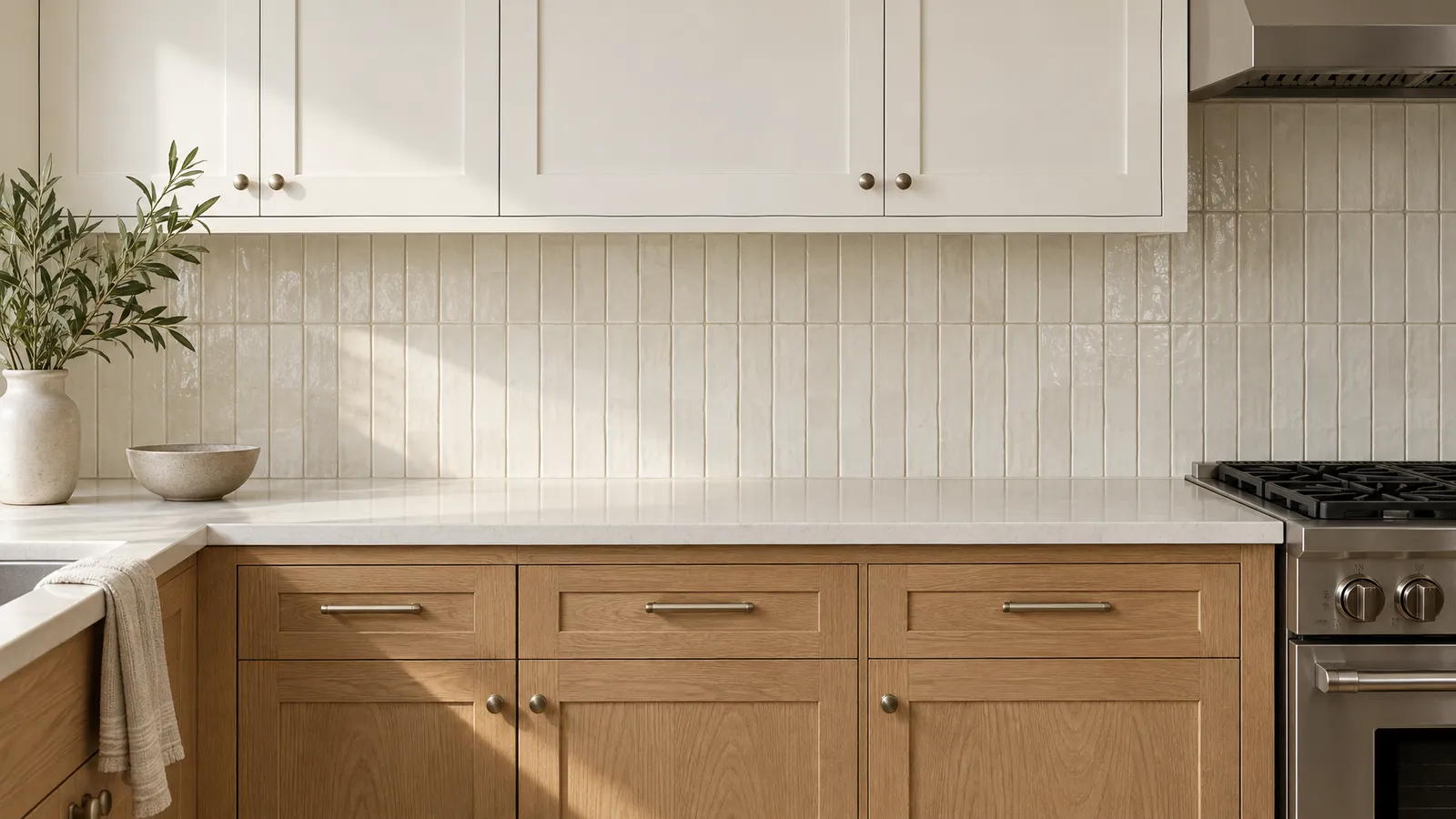
Wood cabinets, whether a warm oak, a walnut, or a rift-cut white oak, bring their own grain and color variation to the kitchen, which means the backsplash doesn't need to work as hard to add visual interest. The goal here is usually balance rather than contrast. A busy, high-pattern tile against a strongly grained wood cabinet can make the whole kitchen feel visually noisy.
Simple, calm tile shapes suit wood: a plain white or cream subway tile, a large-format porcelain panel, or a soft handmade tile in a single muted color. If your wood cabinets lean warm (honey oak, cherry), cooler backsplash tones like a soft gray or blue-gray create a pleasant contrast without fighting the wood grain. If your cabinets lean cool (white oak, ash), warmer neutrals like cream or a pale terracotta keep the kitchen from feeling cold.
Two-tone kitchens, where wood lower cabinets pair with painted uppers or open shelving, raise a specific question. In that layout, the backsplash often reads best when it relates to the upper cabinet color rather than the wood, since that's the zone it sits next to. If you're weighing how the whole finish palette comes together, our guide to cabinet stains, paints, and veneers breaks down how finish choices affect the rest of the room, including the backsplash decision.
Natural stone backsplashes, like a honed marble or a travertine, suit wood cabinets because both materials carry natural variation. Keep the veining or pattern subtle enough that it doesn't compete with the cabinet's own grain, and read the care notes in the next section first, since both of those stones are sensitive to acids.
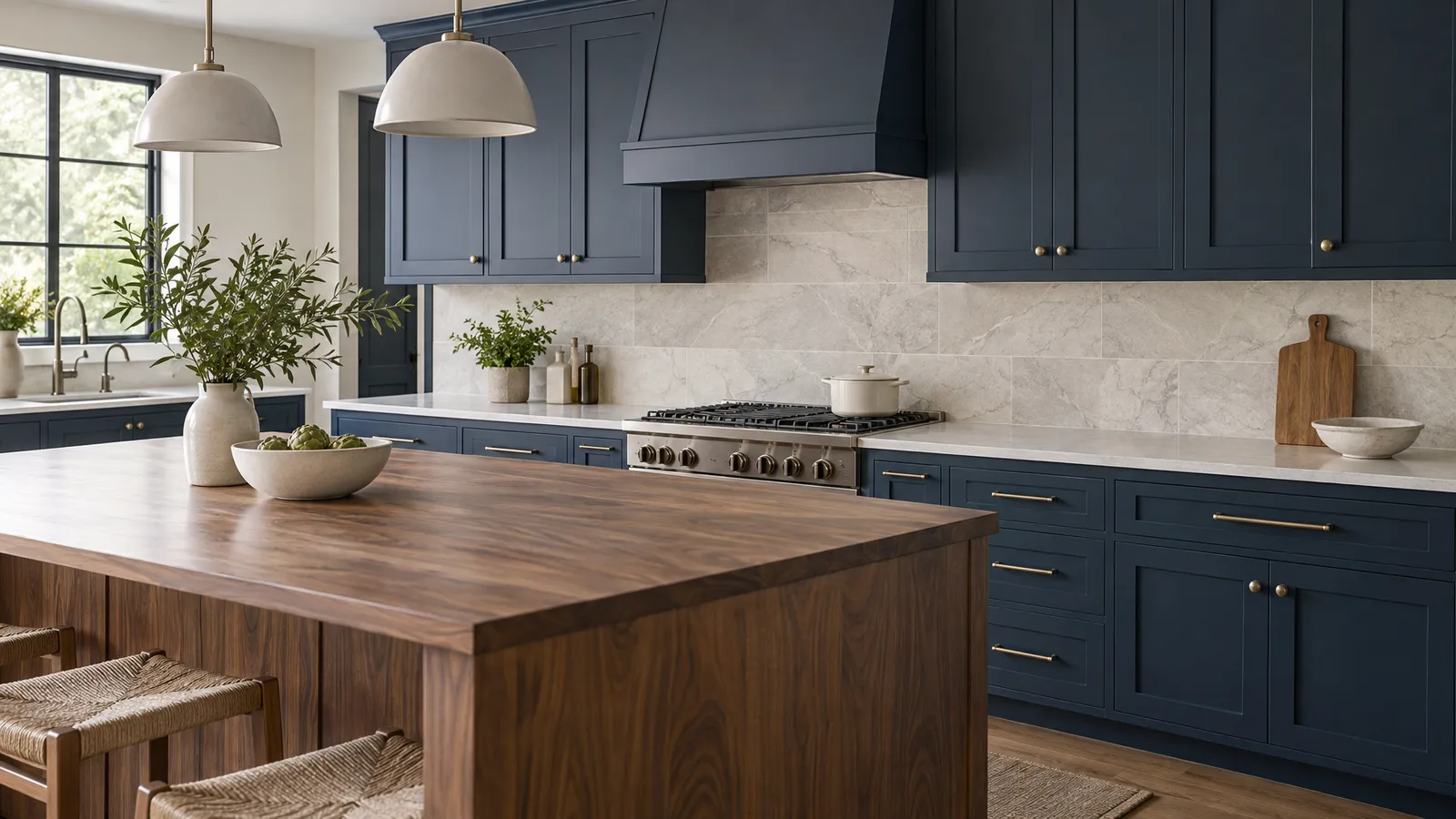
Light tile against navy cabinets keeps a dark palette from feeling closed in.
Tile Material: What to Know About Care Behind a Stove
Looks matter, but a backsplash also has a job to do: protect the wall from grease and water. Materials differ in how much water they absorb and how they want to be cleaned, and that affects maintenance next to your cabinets.
- Porcelain and glazed ceramic tile are practical, widely available choices in nearly any color or finish. They are not the same, though. Tile maker Daltile says porcelain has "a water absorption rate below 0.5%, making it virtually impervious to water," while ceramic tile "absorbs more water." Ceramic tile is glazed, and the glazed face is what you wipe clean. Check the product's own specifications for the rating that applies.
- Natural stone brings texture and variation that suits wood and stone countertops, but stones differ. The Natural Stone Institute notes that "many stones do not require sealing," though sealing is a common practice. Calcareous stone is composed mainly of calcium carbonate — marble and limestone (travertine is a form of limestone) are carbonate stones — and the Institute says calcium carbonate "is sensitive to acidic solutions," and "products containing lemon, vinegar or other acids may dull or etch calcareous stones." Siliceous stone, composed primarily of silicates such as quartz and feldspar (granite is mostly quartz, feldspar and mica), is in the Institute's words "generally resistant to most acids found in kitchen settings." Whether and how often to seal is a question for your stone supplier, for the exact stone and finish you choose.
- Glass tile reflects light and adds shimmer, which can work against both dark and light cabinets. Its glossy face shows water marks more readily than a matte tile.
- Zellige and handmade tile bring irregularity that machine-made tile doesn't. Zia Tile's installation guide says zellige is typically laid "edge to edge OR with a 1/16" grout spacing," and that "irregular edges, crazing, pits and small hairline cracks are common, to be expected, and part of the traditional aesthetic," with grout filling the pits and chips. The same guide recommends sealing tiles and grout exposed to continuous moisture, re-sealing "at least every 1-2 years, or as often as needed," and cleaning with neutral-pH products. That character is part of the appeal for some homeowners and a dealbreaker for others.
Whatever material you choose, the area directly behind the range deserves special attention. One option is to extend the backsplash behind the cooktop up to the vent hood, or use a single slab there, which keeps that wall covered where splatter lands and creates a natural focal point that ties the cabinet and countertop finishes together. A slab has far fewer joints than tile; any tiled area, zellige included, has grout lines to clean.
Grout Lines, Layout Patterns, and the Details That Make It Look Custom
Two kitchens with identical tile and identical cabinets can look quite different depending on layout and grout choices. Much of that comes down to whether the installation details were planned against the cabinet lines, not just the tile itself.
Start with alignment. Your backsplash layout should reference your cabinet lines, not just the countertop edge. A tile pattern centered on the range that ignores where the upper cabinets start can look subtly off balance. When we design a kitchen at our San Jose showroom, we share the cabinet elevations with your tile installer so the backsplash pattern can be laid out against them before tile is ordered.
Layout pattern changes the personality of even a plain tile. A straight stack reads modern and clean, especially against flat-panel or handleless cabinets. A traditional running bond (offset by half) suits Shaker-style or traditional cabinet doors. Herringbone and chevron patterns add movement and can work as a focal accent behind the range, even in a kitchen that's otherwise simple.
Grout color deserves one more mention here: grout that matches the tile gives a continuous, quiet surface, while contrasting grout highlights the tile shape and pattern, which suits a kitchen where the backsplash is meant to be a visual statement rather than a backdrop to the cabinets.
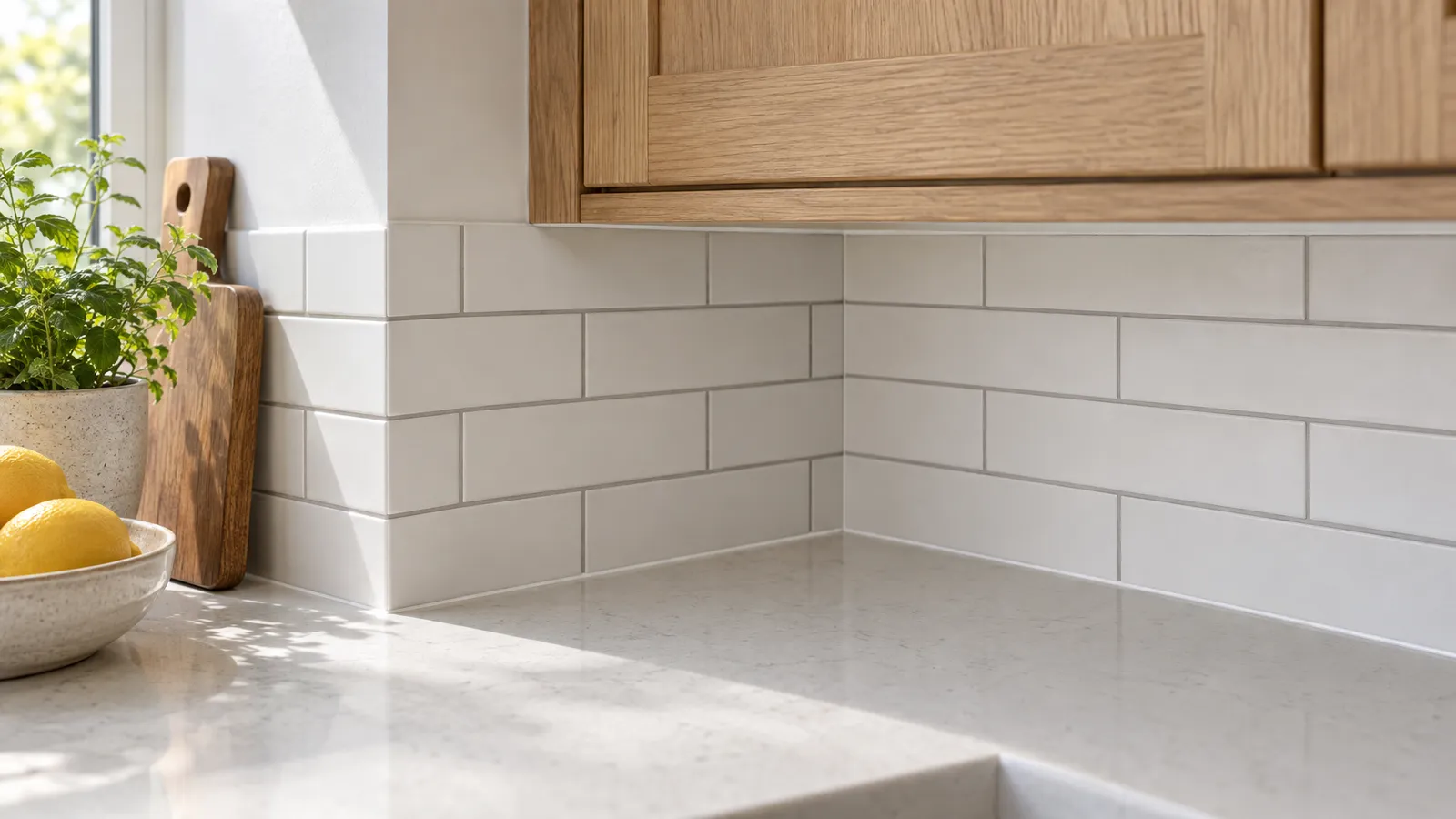
Grout color and layout pattern change how a simple tile reads against your cabinet line.
FAQ: Backsplashes and Cabinet Pairing
How do I choose a backsplash color that matches my cabinets?
Start with undertone, not just color. Cool white cabinets tend to pair with cool-toned tile (bright white, gray-blue), while warm white or cream cabinets suit warm neutrals or textured handmade tile like zellige. For dark cabinets, a lighter backsplash avoids a closed-in feel. For wood cabinets, keep the tile simple and let the wood grain provide the visual interest. Always compare samples side by side in your own kitchen's light.
Should my backsplash match my countertop or my cabinets?
It should complement both, but lean toward whichever surface has more visual weight in the room. If your countertop has bold veining, choose a quieter backsplash so the two don't compete. If your countertop is plain, the backsplash has more room to introduce pattern or color that ties back to the cabinet finish.
Which backsplash styles suit modern and warm kitchens?
Two quite different options. Handmade tile such as zellige suits warm and light kitchens, with its irregular, glossy surface; expect grout joints, natural pits and crazing, and periodic sealing where it gets wet. A full-height slab backsplash, often in the countertop material, suits modern kitchens with flat-panel cabinets and has far fewer joints to clean. Choose by the look you want and the care you're prepared to give it.
How far should a backsplash extend up the wall?
It's a design choice rather than a fixed rule. A short strip a few inches high protects the wall right behind the counter; running tile all the way up to the underside of the upper cabinets covers the whole wall between counter and cabinets; and behind open shelving or a range hood, some kitchens take tile to the ceiling for a more finished, built-in appearance.
Can I install a new backsplash without changing my cabinets?
Yes. Replacing a backsplash leaves the cabinets in place, so it's a much smaller project than new cabinetry, and a new tile can change how existing cabinets read, especially if the current tile clashes. Compare tile samples against your cabinet doors before ordering, since showroom lighting can make colors look different than they will under your own kitchen lighting.