


Kitchen Cabinet Finishes: Stains, Paints & Veneers
A San Jose design studio compares cabinet stains, paints, and veneers: durability, maintenance, cost, and how to pick the right finish.
Stain, paint and surfacing materials solve different problems. Stain colors real wood and keeps the grain visible. Paint is opaque, so it gives you a wide color choice over wood or MDF and hides the wood's color, though grain texture can still show through on some species. Surfaces like wood veneer, thermofoil and laminate change what the door is covered with, and each comes with its own care rules. Pick by how the kitchen is used, then compare the specific cabinet lines.
A door style — shaker or a slab — is easy to picture. Finish is harder, because it decides how the kitchen ages, how scratches are repaired and how the doors should be cleaned. Below is what each option is, how it wears, how it's cared for and repaired, and the questions worth asking when you compare samples at a cabinet showroom.
Stained Wood: Showing the Grain
Wood stain changes the color of wood while letting the grain pattern stay visible. It needs real wood to work on — solid wood or a wood veneer — because it depends on how the wood itself takes color. Stain on its own isn't the protective layer: most interior wood stains need a varnish or other finish over them for longer-term protection. On factory cabinetry, that top layer is typically a hard clear coat; KraftMaid, for example, says it protects its wood doors, face frames and drawer heads with a conversion varnish topcoat.
Species matters as much as the stain color. Different woods absorb stain differently: Minwax describes hard maple as "an extremely dense, tight-pored wood that does not absorb much stain" and cherry as having small pores that make it "difficult to make significant changes to its natural color," and it lists hard maple among the woods that benefit from a pre-stain conditioner to reduce blotching. Results depend on the species, the individual boards, preparation and the stain system. That is why the same named stain can look noticeably different on two species, and why it's worth seeing a full door sample in the species you're considering, not just a color chip.
Wood also changes over time. KraftMaid's care guide notes that it is natural for wood species in all finishes to show color changes from exposure to light, humidity and temperature changes, along with natural graining differences and color variation between pieces. If you like that character, stain puts it on display.
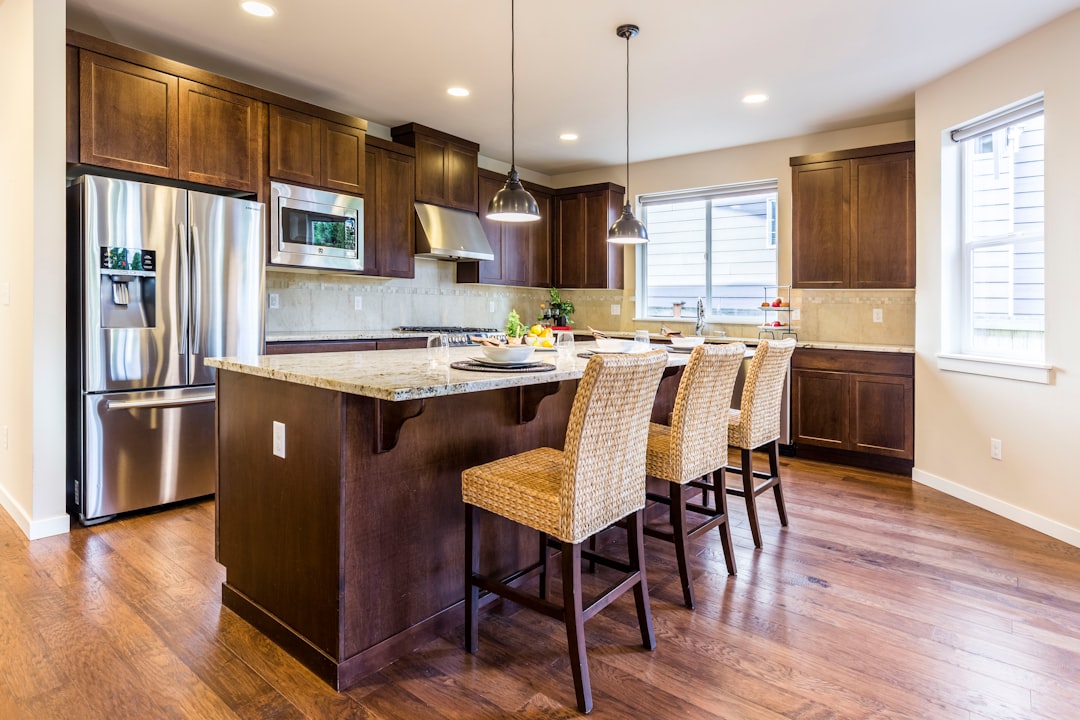
Stain lets the natural wood grain show through, so no two doors look exactly alike. Photo: Francesca Tosolini / Unsplash.
Painted Cabinets: Opaque Color, Grain Texture Varies
Paint is opaque, so it covers the surface underneath. That lets it go on solid wood and on smooth engineered panels such as MDF, and it means your color choice isn't limited by what a wood species will take. It hides the wood's color and figure, but not always its texture: KraftMaid notes that "wood grain, pin holes, knots and mineral streaks may remain visible as a dark area or texture under painted finishes," and that open-grain woods such as oak and hickory "tend to show more than fine-grained species (Maple, Cherry)." KraftMaid itself offers its paints only on maple and its engineered EverCore material for that reason. If you want a smooth, grain-free painted look, ask what species or panel material the painted door is made of and look at a painted sample in that material.
A chip in a painted door can expose a different color underneath, so damage on painted doors tends to show as a contrasting mark rather than blending into grain. Edges and corners around handles and the sink base are where hands, towels and water meet the door most often, so those are the places to check when you compare how a finish is built. Ask what primer and topcoat a factory painted finish uses and what the manufacturer says about care.
If you're repainting existing cabinets yourself, preparation matters more than the paint. Sherwin-Williams' cabinet steps start with a thorough clean with a cleaner-degreaser "to remove all grease and oils that normally buildup on kitchen cabinetry," then sanding, then a bonding primer tested for adhesion on an inconspicuous spot first, a light sanding of the primer with very fine (220-grit) paper, and an enamel topcoat, with at least 24 hours of drying between primer and sanding and between coats.
Wood Veneer, Thermofoil and Laminate: Three Different Surfaces
These three often get grouped together, but they are different materials:
- Wood veneer is a thin slice of real wood — it can be as thin as 1/40 inch — glued onto a core panel such as particle board or MDF. Because the face is real wood, it can be stained and shows real grain.
- Thermofoil (rigid thermofoil, RTF) is a PVC film that is thermoformed and vacuum-formed onto MDF cabinet parts. It can have a solid color or a printed wood-grain look, but the surface is plastic film, not wood.
- High-pressure laminate (HPL) is made of layers of resin-impregnated paper — a kraft paper core, a decorative paper and a protective overlay — pressed together under heat and high pressure into a sheet, which is then bonded to a panel.
With wood veneer, the thin face is the thing to protect: a veneer is only so thick, so heavy sanding is not the repair strategy it can be on solid wood. Keep water away from edges and seams, especially around the sink and dishwasher.
Thermofoil is widely available and reasonably priced, but it is more susceptible to heat and moisture damage than many other materials. KraftMaid recommends a heat shield on cabinets next to a self-cleaning appliance for thermofoil or laminate door styles, and removing adjacent doors and drawers during a cleaning cycle. Keep heat-producing countertop appliances such as coffeemakers and toasters from venting onto thermofoil doors. For what else moves a cabinet budget, see our kitchen cabinet cost guide.
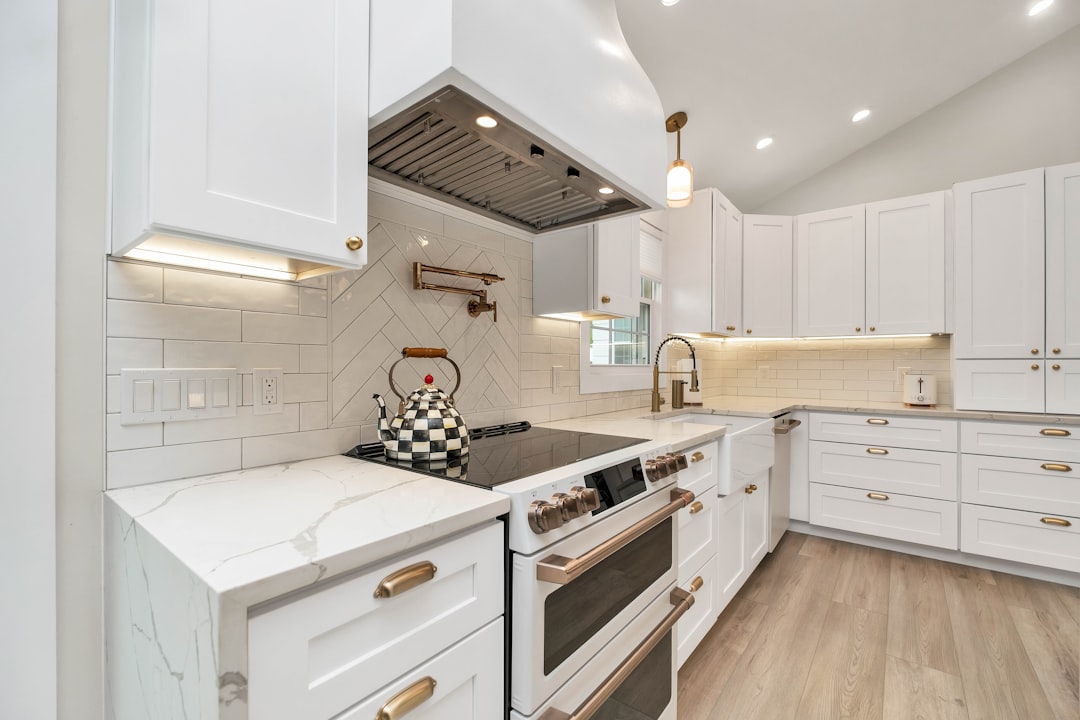
Paint gives a wide color choice and an opaque, even color; how smooth it looks depends on the door material underneath. Photo: Zac Gudakov / Unsplash.
Cleaning and Care by Finish
Care instructions differ by material, and the manufacturer's own guide for your line is the one to follow. KraftMaid's published guidance is a useful example of how different the rules are:
- Wood (stained or painted): wipe with a damp cloth, then dry; for grease or soil, use a mild soap-and-water solution or a mild cleaner without wax, petroleum solvents or silicones, rinse and dry. Never use detergent, abrasive cleaners, scouring pads or powdered cleansers, and keep oven cleaner off the cabinets. Wipe spills right away, and don't hang damp towels over doors — over time that moisture can cause permanent water damage.
- Thermofoil and foil finishes: warm water and a cotton cloth; if needed, a non-detergent, non-abrasive household cleaner. Do not use products with acetone, concentrated alcohols or acetates, and avoid solvents and abrasives, which may break down the bonds on edge banding. Avoid wax products, and never leave a damp cloth sitting on the surface.
- Gloss acrylic and high-gloss foil: wet microfiber or chamois with mild soap and water; never dry-wipe, and keep paper towels, brushes and scourers away from it.
In short: none of these finishes wants abrasives or harsh solvents, and all of them want water wiped up promptly. The differences are in which cleaners are allowed and how the surface is wiped.
Repairs and Touch-Ups
Small damage is usually fixable on both painted and stained doors, but the tools differ. KraftMaid's touch-up guidance for painted finishes uses a touch-up pen: buff the damaged and surrounding area with a Scotch-Brite pad to blend the sheen, apply the pen with light even strokes, let it dry, and optionally finish with a clear coat. It notes that pens work best for small, minor imperfections, and that larger damage may call for repainting the whole cabinet or professional help. For stained finishes it uses fill sticks for nicks, gouges and small scratches, scrapes off the excess, adds grain marks with a touch-up pen if needed, and optionally seals with a clear spray. Its care guide adds that substantial repairs should only be attempted by professional refinishers.
Two practical points follow. First, ask whether a touch-up kit matched to your color comes with the cabinets. Second, a repair's success depends on the size of the damage and how well sheen and color match — on either finish — so keep expectations realistic for anything bigger than a nick.
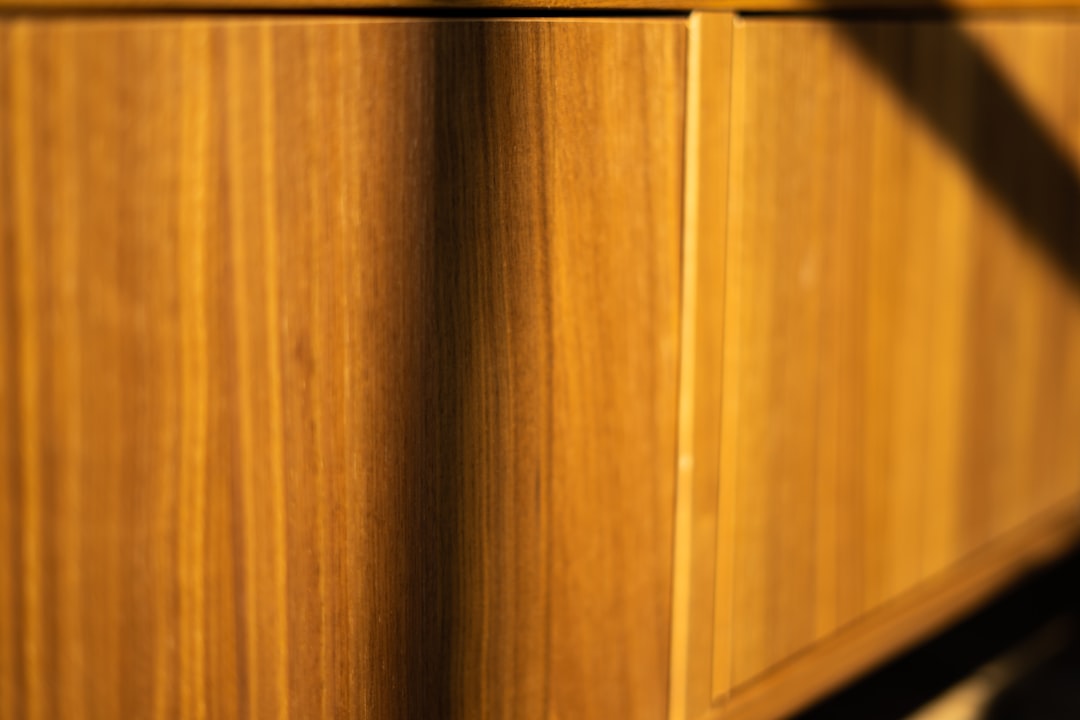
Grain is what a stain shows off, whether the face is solid wood or a wood veneer. Photo: Tatiana Rodriguez / Unsplash.
Cost: Compare Like for Like
Finish and material both affect price, but a comparison only means something when the rest of the cabinet is the same. A solid-wood stained door and a painted MDF door differ in substrate as well as finish; a thermofoil door differs in surface, core and construction. Prices also vary by cabinet line and supplier, so general rankings don't transfer from one catalog to another.
The useful move is to ask for the same cabinet box and door style priced in the finishes you're considering. If you're weighing mixed finishes — say painted perimeter cabinets with a stained island — price it both ways. Our kitchen layout planning guide covers where an island sits in the plan, and the cabinet lines we supply are on our brands page.
How to Choose the Right Finish for Your Kitchen
Start with how the kitchen is used, not how a sample looks under showroom lights:
- Do you want to see wood grain? If yes, you're choosing between stained solid wood and stained wood veneer. If no, paint, thermofoil or laminate are all on the table — for paint, choose a fine-grained species or a smooth panel material, since grain texture can telegraph through paint on open-grain woods.
- Where is the heat? If doors will sit next to a self-cleaning oven or under a spot where the coffeemaker vents, read the manufacturer's heat guidance before choosing thermofoil or laminate there.
- Where is the water? Sink bases and dishwasher-side doors see the most moisture. Whatever the finish, follow the maker's advice on spills and towels.
- How will you clean? If your household reaches for strong cleaners, check the care list for the exact finish first — some common products are specifically ruled out.
- How does it look in your light? A north-facing kitchen gets consistent but muted light, and Benjamin Moore suggests whites with a hint of yellow there to offset the cool cast. Look at a real door sample in the room at different times of day.
FAQ: Cabinet Finishes
Is stain or paint more durable on kitchen cabinets?
Durability depends mostly on the protective coat and the product line, not on the word "stain" or "paint." Damage shows differently: a chip in paint can reveal a contrasting color underneath, while marks on stained wood sit against grain and color variation. Both can be touched up for small damage; larger damage may need a professional.
Can you paint over stained cabinets?
Yes, with preparation. Sherwin-Williams' steps are to clean thoroughly with a cleaner-degreaser, sand, apply a bonding primer (testing adhesion on a hidden spot first), lightly sand the primer with 220-grit paper, then apply an enamel topcoat, allowing at least 24 hours between coats. Follow the instructions of the primer and paint you choose.
What's the difference between wood veneer and thermofoil?
Wood veneer is a thin slice of real wood glued to a core panel such as MDF or particle board, so it has genuine grain and can be stained. Thermofoil is a PVC film vacuum-formed onto MDF; it can imitate wood grain or a solid color but isn't wood, and it is more susceptible to heat and moisture damage than many other materials.
Do cabinet finishes change color over time?
Wood does. KraftMaid notes it is natural for wood species in all finishes to show color changes caused by exposure to light, humidity and temperature changes. Its guide also warns that white doors discolor after prolonged exposure to tobacco smoke. Wax polishes can build up a film, which is another reason to stick to the recommended cleaners.
How should I clean thermofoil cabinets?
Warm water and a cotton cloth, or a non-detergent, non-abrasive household cleaner if needed. Avoid acetone, concentrated alcohols, acetates, solvents, abrasives and wax products, and don't leave a damp cloth on the surface. Check your own cabinet maker's care guide, since instructions vary by product.
About the author
Anthony
Design Lead, Excelle Kitchen & Bath
Leads cabinetry and storage design at Excelle Kitchen & Bath, a design studio with a San Jose showroom serving the Bay Area. Ten years of kitchen and custom storage projects, specialising in space planning, semi-custom cabinetry specification, and closet systems.